1856 – American industrialist and firearms manufacturer Samuel Colt (41) weds American philanthropist Elizabeth Hart Jarvis (29) at Christ Episcopal Church in Middleton, Connecticut, until his death in 1862
Prescott Western Heritage Museum Gala

This Day…
1871 – Jesse James & his gang robs Obocock Bank (Corydon Iowa), of $15,000
Bearing the Unbearable
Enter now to win a copy of
The Widowed Ones: Beyond the Battle of the Little Big Horn
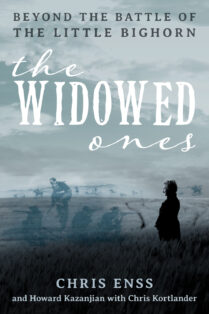
On June 25, 1876, seven officer’s wives lost their husbands at the Battle of the Little Bighorn. The story is told in the book The Widowed Ones: Beyond the Battle of the Little Bighorn. The friendship the bereaved widows had with one another proved to be a critical source of support. The transition from being officers’ wives living at various forts on the wild frontier to being single women with homes of their own was a difficult adjustment. Without one another to depend upon, the time might have been more of a struggle.
The Widowed Ones was the 2023 winner of the
Women Writing the West Willa Cather Award for
Scholarly Nonfiction.
“Exceptionally well written, organized and presented, ‘The Widowed Ones: Beyond the Battle of the Little Bighorn’ is an ideal and unreservedly recommended addition to 19th Century American Biography supplemental studies curriculum.”
― Library Bookwatch/Midwest Book Review
“The rigor of the scholarly research on display here is quite simply astonishing, as the authors seem to leave no stone unturned.”
— Kirkus Reviews
“Readers interested in 19th-century, women’s and military history will be drawn into this thoroughly humane and sympathetic treatment of U.S. army widows.”
― Library Journal
“The book weaves its way through the devastation wrought upon Libby Custer and the widowed wives of the men that wore the blue of the 7th Cavalry. Enss and Kazanjian do a terrific job detailing the women’s handling of loss; not only their husband’s demise, but also the pain of official criticism aimed to besmirch their loved ones, and their grappling with getting on with their lives without any apparent means. The path Libby et. al. took is detailed in “The Widowed Ones”, an insightful glimpse of how the survivors cope, or don’t. Each reader can measure their grit and resolute devotion to their fallen husbands. It is a marvelous story. Enss and company have filled in a neglected hole in one of the West’s greatest historical events. If you are restricted to one last book purchase, this is the one.”
― Arizona Daily Star
This Day…
1922 – Completed Lincoln Memorial dedicated by US Chief Justice William Howard Taft in front of 50,000
The Posse After Tiburcio Vasquez
Enter now to win a copy of
The Principles of Posse Management: Lessons from the Old West for Today’s Leaders

A light, frigid rain tapped the dirty windows of a small store located along the banks of the San Joaquin River near the town of Millerton, California. A half dozen ferryboat operators were inside soaking up the warmth emanating from a fireplace. Four of them were huddled around a table playing cards; the other two were enjoying a drink at a makeshift bar, while an unkempt clerk arranged a row of canned goods across a warped shelf.
The clerk was entertaining the preoccupied men in the room with a song when the shop door swung open. He was the last to notice the figures standing in the entranceway. He looked up from his work after being conscious of his own loud voice in the sudden silence. He slowly turned to see what everyone else was staring at.
The outlaw Tiburcio Vasquez entered the store with his pistol drawn. Three other desperadoes, all brandishing weapons, followed closely behind. Vasquez, a handsome man of medium height with large, dark eyes, surveyed the terrified faces of the patrons as he smoothed down his black mustache and goatee. “Put up your hands,” he ordered the men. The clerk quickly complied, and the others reluctantly did the same.
Two more of Vasquez’s men burst into the store through the back entrance and leveled their guns on the strangers before them.
“You don’t need a gun here,” the clerk tried to reason with the bandits. Vasquez grinned as he walked over to the man.
“Yes, I do,” he said as he placed his gun against the clerk’s temple. “It helps quiet my nerves.”
Vasquez demanded the men drop to the floor, facedown. After they had complied, their hands and feet were tied behind them. One of the men cursed the desperadoes as he struggled to free himself. “You damned bastard,” he shouted at Vasquez. “If I had my six-shooter I’d show you whether I’d lie down or not.”
The bandits laughed at the outburst and proceeded to rob the store and its occupants of $2,300. The November 10, 1873, holdup was one of more than one hundred such raids perpetrated by the thirty-eight-year-old Mexican and his band of cutthroat thieves and murderers in their violent careers. The desperadoes escaped the scene of the crime, eluding authorities for several months before they were caught.
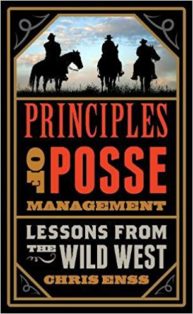
The Principles of Posse Management 2
I'm looking forward to hearing from you! Please fill out this form and I will get in touch with you if you are the winner.
Join my email news list to enter the giveaway.
"*" indicates required fields
To learn more about the posse after Tiburcio Vaquez read
The Principles of Possee Management
This Day…
1923 – US Attorney General says it is legal for women to wear trousers anywhere
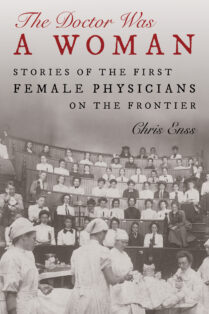
LA Book Review of The Doctor Was A Woman

“Smallpox, tuberculosis, childbirth, diphtheria, gunshots, “Spanish flu,” broken bones, and more. These are just some of the maladies that settlers and others living in the western US faced during the late 1800s and early 1900s. This slim history provides well-researched vignettes of ten women who became doctors and served their communities in that period. Often, their own families didn’t support their ambitions and they had to work teaching or sewing or laundering to afford medical school.
Facing prejudice, blizzards, prairie fires, and personal hardship, they persevered to attain education and recognition. But in the West, towns with no other doctors were willing to take a risk on these tough resilient women, many of whom lived in their nineties. Several of the women also advocated for the right to vote and for temperance, although one notably argued for the sterilization of the “criminally insane,” convinced that such tendencies were hereditary.
This reader was particularly impressed with the physician who reconstructed a man’s face through thirty cosmetic surgeries over six months, in 1887! And the patient lived another two decades. Illustrated with period photographs, this well-researched book also includes medical advice of the era: treatments for flu, the care of infants, and eye health. This is a fascinating read for anyone interested in history, health care, and women’s history.”