They Went That-A-Way

The Went That-A-Way


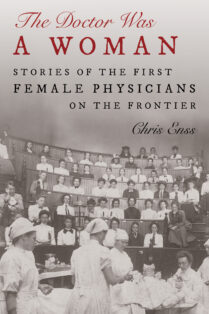
In celebration of the new book coming out entitled The Doctor Was a Woman: Stories of the First Female Physicians on the Frontier and the impending holiday, this tale of Dr. Elizabeth Blackwell’s demise seemed fitting.

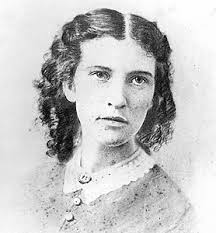
On Wednesday, January 25, 1911, physicians across the world gathered at the great hall at the Academy of Medicine in New York to honor America’s first woman doctor, Elizabeth Blackwell.  The tenacious pioneer in the fight for the right of women to study and practice medicine had died nine months prior to the event honoring the contributions she made to the field.  The audience was composed largely of women all of whom owed a debt of gratitude to Elizabeth Blackwell.

Born in Bristol, England on February 3, 1821, Elizabeth immigrated to America in 1832 with her parents.  Her desire to attend school and study medicine began at an early age.  Elizabeth was twenty-six years old when she was admitted to New York’s Geneva College in 1847.  She had applied to twenty institutions before being accepted as a medical student at the prestigious university.  The male students there believed Elizabeth’s request was a joke and agreed to let her attend the classes based on that idea, but the daring young woman was not playing around.  She prevailed and triumphed over taunts and bias while at school to earn her degree only two years after enrolling.

While in her last year of school, she treated an infant with an eye infection.  As she was washing the baby’s eye with water she accidentally splattered the contaminated liquid in her own eye.  Six months later she had the eye removed and replaced with a glass eye.  Hospitals and dispensaries refused to admit her to practice at their facilities and she was denounced by the press and from the pulpit.

After graduating in 1849, Elizabeth found herself socially and professionally boycotted.  Public sentiment was so against her for pursuing a career in a field deemed unladylike that she could not find a place to live anywhere in New York.  Using funds given to her by her family she built her own home.

In 1854, she borrowed the capitol needed to build the first hospital for women in the country.  Most of the patients she worked with were poor.  Patients were charged a mere $4 a week for services that would cost them $2,000 at another facility.  Elizabeth also founded the Women’s Medical College of New York and when the Civil War broke out she assisted in launching the Sanitary Aid Association.  In addition to maintaining her practice and creating benevolent community services, Elizabeth also wrote a number of books on the subject of medicine.  Two of her most popular titles were Pioneer Work in Opening the Medical Profession for Women and Essays in Medical Sociology. 

By the turn of the century Elizabeth Blackwell had retired from medicine and returned to England.  In the spring of 1907 she was injured in a fall from which she never fully recovered.  She died on May 31, 1910 from a stroke.  The epitaph below the Celtic cross which marks her grave at Kilmun Churchyard on the Holy Loch, near Clyde, includes these words:  “The first woman in modern times to graduate in medicine (1849) and the first to be placed on the British Medical Register (1859).
 

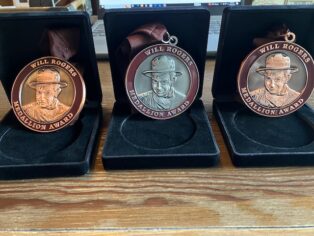
Will Rogers Medallion Awards 2023


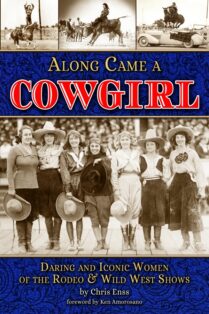
What a great weekend at the Will Rogers Medallion Award program! Seeing good friends, spending time with accomplished Western authors, poets, and filmmakers, listening to Craig Johnson, NY Times bestselling author and creator of the Longmire series, share tales of his early days in the business, and the announcement that the Will Rogers Medallion Award will officially be moving to the Will Rogers Museum in Oklahoma made the event complete. I returned to California late last night with these items and feeling grateful for the recognition The Widowed Ones and Along Came a Cowgirl received.


along came a cowgirl cover

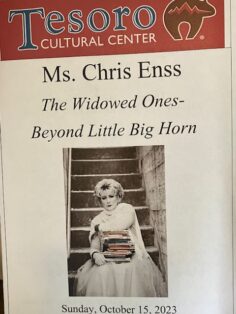
Tesoro Cultural Center


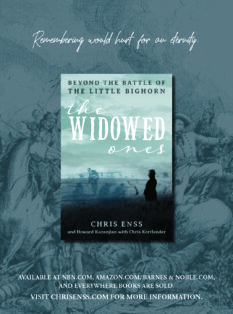
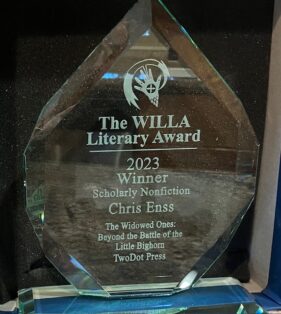
What an amazing time in Colorado promoting The Widowed Ones: Beyond the Battle of the Little Bighorn. The lecture series ended last night at the Tesoro Cultural Center. The setting was spectacular and the sold-out crowd made the event memorable. The highlight of the trip was receiving the Willa Cather Award for Scholarly Nonfiction work from Women Writing the West for The Widowed Ones. Thank you Women Writing the West. I’m extremely grateful for the honor.


Path to Righteousness

Enter now to win a copy of

The Death Row All Stars: A Story of Baseball, Corruption, and Murder


On July 18, 1911, under a blue and cloudless sky, the murderers, burglars, rapists, and confidence men that made up the Death Row All Stars emerged quickly from the baselines of the baseball diamond at the penitentiary and spread across the practice field for their first game. Warden Alston and a host of other prison officials, as well as inmates were on hand to watch.  Inmates craned their necks to see the action from their barred windows and cheered the players on as they whipped the ball from base to base. Warden Alston had supplied the team with gloves, bats, and uniforms, and the ball club looked like a professional team.

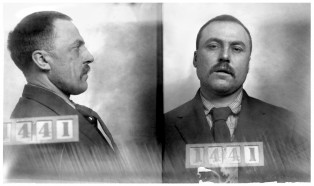
It was evident after practicing with the other men on the team only a short while that Joseph Seng was an exceptional baseball player. News of the talented addition to Alston’s All Stars spread quickly throughout the area. Patrons who frequented the Turf Exchange, the Senate, the Elkhorn, and other watering holes in Rawlins, Wyoming, speculated on how well the team would do against more established ball clubs in the region. Inmate and captain of the Death Row All Stars’ George Saban encouraged such talk whenever he made stops at the saloons as part of his duties transporting items to and from the prison accompanied by prison guard D. O. Johnson in the penitentiary wagon. Security was always lax where Saban was concerned. He came and went from tavern to tavern as he pleased and boasted about the baseball team he helped manage.

Betting on baseball was commonplace in 1911, regardless of its legality. Partnering with a drifter named George Streplis, a man who had been arrested in March 1911 in Wyoming and held over for trial on gambling charges, Saban had plans to capitalize on the trend of betting on baseball games by urging patrons at saloons in Rawlins to bet heavily on the Death Row All Stars. Any ideas Saban had about placing bets on the penitentiary ball club were tabled, however, until he knew how long Seng would be at the Rawlins facility. He didn’t want to gamble on the team if Seng wasn’t going to be at the prison long enough to play with the All Stars. An appeal of his sentence had been filed with the governor immediately; on June 15, 1911, Governor Carey responded favorably to the appeal, and, on July 18, 1911, the Chief Justice Board of the state Supreme Court granted a stay of execution in his case.

The stories of the men who took to the field were varied. Shortstop Joseph Guzzardo had killed a woman in 1908 while shooting at a man who was threatening his life. Eugene Rowan, the first baseman, had been convicted of breaking and entering and attempted rape in Cheyenne. Right fielder and catcher James Powell had attacked a young woman. George Saban had pled guilty to three killings. And catcher and fielder Joseph Seng had been sentenced to death for the murder of a man in Uinta County.

Every time a player came to bat and slapped a ripping fastball on the nose for a solid hit to left field or someone snatched up a red-hot grounder and heaved it to the proper base to get an out, the All Stars forgot they were little more than caged creatures. The focus was the game. It was their path to righteousness.


The Death Row All Stars

I'm looking forward to hearing from you! Please fill out this form and I will get in touch with you if you are the winner.

Join my email news list to enter the giveaway.

"*" indicates required fields

Your Name
Please add me to your email news list*

To learn more about George Saban, Joseph Seng and the other players who made up the

Death Row All Stars read

The Death Row All Stars: A Story of Baseball, Corruption, and Murder