Wicked Women

Enter now to win a copy of

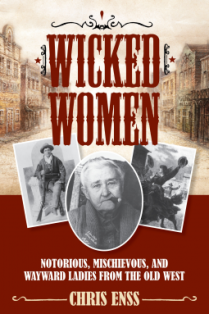
Wicked Women: 

Notorious, Mischievous, and Wayward Women of the Old West


In 1849, women of easy virtue found wicked lives west of the Mississippi when they followed fortune hunters seeking gold and land in an unsettled territory.  Prostitutes and female gamblers hoped to capitalize on the vices of the intrepid pioneers.

More than half of the working women in the California during the 1850s were prostitutes.  At that time, madams – those women who owned, managed, and maintained brothels – were generally the only women out west who appeared to be in control of their own destinies.  For that reason alone, the prospect of a career in the “oldest profession” – at least at the outset – must have seemed promising.

Often referred to as “sporting women” and soiled doves,” prostitutes mostly ranged in age from seventeen to twenty-five, although girls as young as fourteen were sometimes hired.  Women over twenty-eight years of age were generally considered too old to be prostitutes.

Rarely, if ever, did working women use their real names.  In order to avoid trouble with the law as they traveled from town to town, and to protect their true identities, many of these women adopted colorful new handles like Contrary Mary, Little Gold Dollar, Lazy Kate, and Honolulu Nell.  The vicinities where their businesses were located were also given distinctive names.  Bordellos and parlor houses typically thrived in that part of the city known as “the half world,” “the badlands,” “the tenderloin,” “the twilight zone,” or the red-light district.”

The term “red-light district” originated in Kansas.  As a way of discouraging would-be intruders and brazen railroad workers around Dodge City began hanging their red brakemen’s lanterns outside their doors as signal that they were in the company of a lady of the evening.  The colorful custom was quickly adopted by many ladies and their madams.

Generally speaking, a prostitute’s class was determined by her location and her clientele.  High-priced prostitutes plied their trade in parlor houses.  These immense, beautiful homes were well furnished and lavishly decorated.  The women who worked at such posh houses were impeccably dressed, pampered by personal maids, and protected by the ambitious madams who managed the business.  In general, parlor houses were very profitable.  Madams kept repeat customers interested by importing women from France, Russia, England, and the East Coast of the United States.  These ladies could earn more than $25 a night.  The madams received a substantial portion of the proceeds, which were often used to improve the parlor house or to purchase similar houses.

The lifestyle was, without a doubt, a dangerous one, and many women despised being a part of the underworld profession.  As Nebraska madam and prostitute Josie Washburn noted in 1896: “We are there because we must have bread.  The man is there because he must have pleasure; he has no other necessity for being there; true if we were not there the men would not come.  But we are not permitted to be anywhere else.”

Entertaining numerous men often resulted in assault, unwanted pregnancies, venereal disease, and even death.  Some prostitutes escaped the hell of the trade by committing suicide.  Some drank themselves to death; others overdosed on laudanum.  Botched abortions, syphilis, and other diseases claimed many of their lives as well.

In the late 1860s, a concern for the physical condition of prostitutes – and moreover, for the effect their poor health was having on the community at large – was finally addressed.  Government officials, alerted to the spread of infectious illnesses, decided to take action against women of ill repute.  At a public meeting in New York City, a bill was introduced that was aimed at curtailing the activities of prostitutes who did not pass health exams.  The goal of the bill was to stop the advance of what morally upright citizens termed the “social evil.”
To learn more about the soiled doves of the American frontier read

Wicked Women:

Notorious, Mischievous, and Wayward Ladies of the Old West

Comedy in Prescott


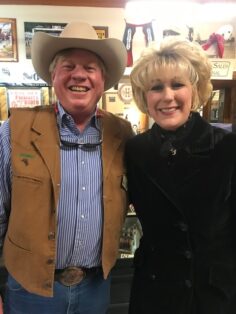
Last week at this time I was manning an author’s table at Art of the Cowgirl in Queen Creek, Arizona. The night before I was in Prescott. I’d been invited to give a presentation at the Western Heritage Center and it was a wonderful experience. In addition to meeting my dear friends Kat and Larry Martin at the event and staying the night at their place, I had an opportunity to meet some of the most kind and generous people at the museum. Prior to giving lectures about women of the American frontier, I was a standup comic. I worked my way through college doing standup at a strip club. Don’t ask me why they needed a comic at a strip club. I have no idea who thought that would work. But it did. Not a night went by that I didn’t hear, “Hey, get those naked women off the stage and bring up a comedian.” And then I would come out.

The good people of Prescott allowed me to work a few bits of comedy into my talk about the Old West. It was a grand time and I was grateful for the opportunity. True West magazine’s senior editor Stuart Rosebrook was instrumental in gaining the Western Heritage Center invite. Rosebrook is one of those people I count on for sound advice when it comes to the subject matters I tackle in the books I write. Had it not been for him I probably wouldn’t have written According to Kate: The Legendary Life of Big Nose Kate, Love of Doc Holliday nor would I have agreed to write Zoe Tilghman’s tale. There are a lot of so-called historians out there who don’t want you to write on certain subjects and they aren’t shy about letting you know. I wish everyone had someone in their corner like Stuart Rosebrook. And I wish everyone could travel to Prescott and meet the fine people who support the Western Heritage Center. What a time I had!

Hospice of the Foothills Event

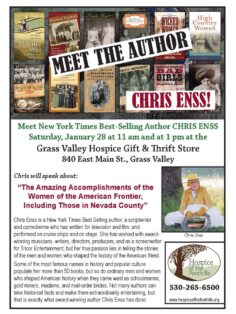
Hospice of the Foothills have invited me to give a talk about women of the Old West on Saturday, January 28. Half of the proceeds from the sales of the books at the event will go to benefit Hospice. Please join me in support of this amazing organization.


This Day…

1908 – Katie Mulcahey is arrested for lighting a cigarette, violating the 1-day old “Sullivan Ordinance” banning women from smoking in public, and is fined $5. Appearing before the judge she stated “I’ve got as much right to smoke as you have. I never heard of this new law, and I don’t want to hear about it. No man shall dictate to me.”

Deadwood’s Madam Dumont

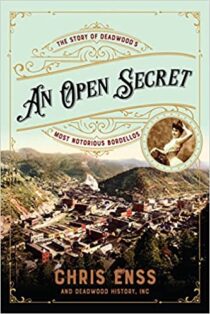
Enter now to win an advanced copy of

An Open Secret: The Story of Deadwood’s Most Notorious Bordellos


Historians believe the scandalous Eleanora Dumont was one of the first madams to arrive in Deadwood Gulch in 1876. Her time in the Black Hills was brief. She was in her late forties, and much of her life as a prostitute and gambler had already been lived by the time she traveled to Deadwood. “Madame Mustache,” as she was also known, stayed in town long enough to fleece a few residents at the faro tables and spend an evening or two with curious men who knew of her reputation. Three years after making her way to the Dakota Territories, Eleanora was living in a gold mining town in California and reminiscing about life in Deadwood.

A pair of miners squinted into the early morning sky as they rode from the gold town of Bodie, California, toward their claim. Shafts of light poked through scattered clouds a few miles ahead on the rocky road. In the near distance, the men spotted what looked like a bundle of clothing lying just out of reach of the sun’s tentacles. They speculated that some prospector must have lost his gear riding through the area, but, as they approached the item, it was clear that it was not simply a stray pack. A woman’s body lay drawn in a fetal position, dead. The curious miners dismounted and hurried to the unfortunate soul.

The vacant eyes that stared up at the men were those of the famed Eleanora Dumont, the “Blackjack Queen of the Northern Mines.” An empty bottle of poison rested near her lifeless frame, and her dusty face was streaked with dried tears. One of the miners covered her with a blanket from his bedroll while the other eyed the vultures circling overhead.

Misfortune and a broken heart led to the fifty-year-old Dumont’s downfall. At one time she had been the toast of the gold rush and one of the most desirable women in the West. A string of bad luck in love and cards drove her to take her own life.

Eleanora Dumont was born in New Orleans in 1829 and came to San Francisco in the early 1850s. She proudly proclaimed to all who asked that she “did not make the long journey for love of the frontier or to find the man of her dreams.” She wanted wealth. “The western heartthrob I’m after is not a man, but that glittery rock lying among the foothills of the Gold Country,” she confessed.


An Open Secret


To learn more about the soiled doves of Deadwood read An Open Secret


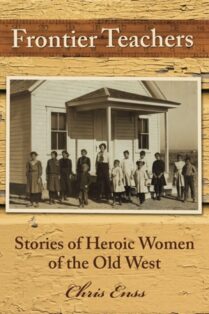
Frontier Teachers

Frontier Teachers Cover

If countless books and movies are to be believed, America’s Wild West was, at heart, a world of cowboys and Indians, sheriffs and gunslingers, scruffy settlers and mountain men―a man’s world. Here, Chris Enss, in the latest of her popular books to take on this stereotype, tells the stories of twelve courageous women who faced down schoolrooms full of children on the open prairies and in the mining towns of the Old West.

Between 1847 and 1858, more than 600 women teachers traveled across the untamed frontier to provide youngsters with an education, and the numbers grew rapidly in the decades to come, as women took advantage of one of the few career opportunities for respectable work for ladies of the era. Enduring hardship, the dozen women whose stories are movingly told in the pages of Frontier Teachers demonstrated the utmost dedication and sacrifice necessary to bring formal education to the Wild West. As immortalized in works of art and literature, for many students their women teachers were heroic figures who introduced them to a world of possibilities―and changed America forever.