Ma Barker: America’s Most Wanted Mother

Enter to win a copy of the book

Ma Barker: America’s Most Wanted Mother


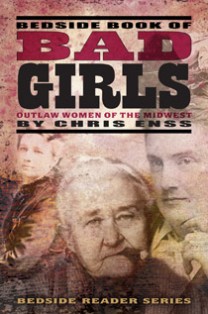
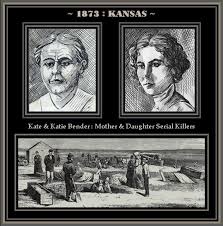
In a time when notorious Depression-era criminals were terrorizing the country, the Barker-Karpis Gang stole more money than mobsters John Dillinger, Vern Miller, and Bonnie and Clyde combined. Five of the most wanted thieves, murderers, and kidnappers by the Federal Bureau of Investigation (FBI) in the 1930s were from the same family. Authorities believed the woman behind the band of violent hoodlums that ravaged the Midwest was their mother, Kate “Ma” Barker.

It was a raw, gusty day in mid-January 1934 when bank president Edward G. Bremer dropped off his nine-year-old daughter, Betty, at Summit School in St. Paul, Minnesota. Parents and children dressed in heavy overcoats and wearing woolen hats hurried across the street and passed in front of Edward’s black Lincoln sedan on their way to the building. A light snow began to fall as he pulled away from the elementary school and headed toward his office. Edward was the president of the Commercial State Bank and traveled the same route to work every day. Each morning he waved goodbye to his little girl at 8:25 and proceeded to his job. He traveled along Lexington Avenue for a half hour, stopping at all the traffic signs along the way.


The car Edward drove was comfortable and warm, and cheerful music spilled from the radio as he contemplated the paperwork waiting for him on his desk. He cast a glance in his rearview mirror every so often but noticed nothing out of the ordinary. It wasn’t until Edward stopped at a stop sign and Alvin Karpis, a tall, slim man in a blue shirt streaked with mud, hurried to the driver’s side window holding a gun, that he considered anything was wrong. Edward was stunned and didn’t move as the armed man flung the driver’s side door open and shoved the weapon into his side. “Move over or I’ll kill you,” Alvin barked at him.

Before Edward had a chance to comply, the passenger’s side door of his car was jerked open, and Arthur “Doc” Barker leaned inside the vehicle. Arthur struck Edward on the head several times with the butt end of a .45 caliber automatic revolver. Blood from the gash sprayed the dashboard. Edward slumped in his seat, unconscious, and Alvin pushed him onto the floor. Arthur jumped inside the car and closed the passenger’s side door.


To learn more about Ma Barker and the Barker-Karpis Gang read

Ma Barker: America’s Most Wanted Mother.

Anna Webber, Frontier Teacher

It’s a Pick-A-Book Giveaway.

This month enter to win any book from the catalog of books I’ve pinned.

Winners will be announced April 30.


Twenty-one-year-old Anna Webber rubbed her eyes and leaned against the rough wall of the sod schoolhouse where she taught. The view from the window of the small building framed the tall grass and wheat fields around Blue Hill, Kansas, perfectly. A slight breeze in the middle distance brushed across the tops of cottonwood trees lining the banks of the Solomon River, richly adding to the peaceful scene.

Anna squinted into the sunlight filtering into the tiny classroom and stretched her arms over her head. The one-room schoolhouse was empty of students, and the young teacher was sitting on the floor grading papers. The room was only big enough for a half a dozen pupils but served more than sixteen children on most days.

Inside the roughly constructed building, made from strips cut from the prairie earth found in abundance around the small settlement, the furnishings consisted of a chair for the teacher and several boards balanced on rocks for the students to sit on. There was no blackboard and no writing desks. The primitive conditions made Anna’s job more difficult than she had anticipated and robbed her of the joy she initially felt when she entered the profession.

The town in Mitchell County, Kansas, where Anna held her first teaching assignment in 1881, was a growing community of farmers and railroad workers. Five years before her arrival, the area had been ravaged by hordes of grasshoppers. The insects destroyed crops and drove settlers away for a time. The ever-advancing railroad brought many back to the fertile ground to raise corn, wheat, and rye.  Anna’s family was among the people who returned to the region to start life anew.


To learn more about Anna Webber and other women who educated the people on the frontier read

Frontier Teachers:  Stories of Heroic Women of the Old West

Rosa May: The Outcast’s Friend

It’s a Pick-A-Book Giveaway.

This month enter to win any book from the catalog of books I’ve pinned.

Winners will be announced April 30.


Rosa May sat beside the bed of a dying miner and wiped the sweat off his feverish brow.  She looked around his rustic, one-room cabin, past the sparse furnishings, and fixed her eyes on a tattered photograph of an elderly man and woman.  “Those are my folks,” the man weakly told her.  “They’re in Marshall County, Illinois.  Where are your folks?”

The question stunned Rosa.  No one ever asked about such things.  No one ever asked her much at all.  Conversation wasn’t what men were looking for when they did business with her.  Rosa glanced out the window at a couple of respectable, well-dressed women.  They watched her through the clouded glass, pointed, and whispered.  She knew what they were saying without hearing it.

Rosa was just one of a handful of “sporting women” living in Bodie, California, in 1900 and she knew what people thought of her.  It used to bother her years ago, but not now.  It was an occupational hazard she’d learned to live with.

“Don’t you have people anywhere?” the miner asked.  Rosa dabbed the man’s head with a cloth and smiled.  “I don’t know anymore,” she answered.  “If I did have, they’d be back in Pennsylvania.”

Rosa’s parents were Irish – hard, strict people.  Rosa had dreamed of the day she would be out of their puritanical household.  She had left home in 1871, at the age of sixteen and soon found there weren’t many opportunities for a poor, petite, uneducated girl with brown eyes and dark, curly hair.  She ended up in New York, hungry, homeless, and eager to take any job offered.  The job offered was prostitution and five years later she came west with other women of her trade, hoping to make a fortune off the gold and silver miners.

Prostitution was the single largest occupation for women in the West.  Rosa hoped to secure a position at a posh brothel with crystal chandeliers, velvet curtains, and flowing champagne.  The madams who ran such places were good to their girls.  They paid them a regular salary, taught them about makeup, manners, and how to dress, and they only had to entertain a few men a night.  If a high-class brothel wasn’t available, Rosa could take a job in a second-class house and work for a percentage of the profits, turning as many tricks as she could each night.  If all failed, she could be a street walker or rent a “crib” at a boardinghouse.  Cribs, tiny, windowless chambers, had oilcloths draped across the foot of the bed for customers in too big of a hurry to take off their boots.


To learn the rest of Rosa May’s story and to read more about the bad girls of the Old West read

Wicked Women:  Notorious, Mischievous, and Wayward Ladies from the Old West.


Sacagawea: Heroine of the Lewis and Clark Journey

It’s a Pick-A-Book Giveaway.

This month enter to win any book from the catalog of books I’ve pinned.

Winners will be announced April 30.


Sacagawea was the young Shoshone Indian woman who served as Lewis and Clark’s translator on their 1803 expedition to explore the uncharted western regions of America.  She made the entire journey to the Pacific, and the return trip, with a newborn baby on her back; many believe without her aid, the journey, commissioned by President Thomas Jefferson, would have ended in failure.  Some accounts say she died in 1812 at age twenty-five of putrid fever, while others believe she died in 1884 on an Indian Reservation in Wyoming.  The child she carried in a papoose was Jean-Baptiste Charbonneau, nicknamed Pompy, meaning first-born, who eventually attended St. Louis Academy with tuition paid by Clark.  Pompy later met Prince Wilhelm of Germany while on a natural history expedition and traveled back to Europe with him, where Pompy learned to speak four different languages.  But by the time he was twenty-four Pompy was back in North America, living as a mountain man.  When the Gold Rush of 1849 started, he got caught up in the fever and died from too much time wading through cold rivers panning for gold.  His cause of death was bronchitis at age sixty-one, and his portrait is the only one of a child on any U. S. coin.


To learn more about Sacagawea and other amazing women who settled the west read Tales Behind the Tombstones.  Available everywhere books are sold.

Visit www.chrisenss.com to enter to win. 


Actress Jeanne Eagels

It’s a Pick-A-Book Giveaway.

This month enter to win any book from the catalog of books I’ve pinned.

Winners will be announced April 30.


In 1929 Jeanne Eagel was nominated for a best actress Oscar for The Letter after she died earlier in the year at age thirty-nine from alcohol and heroin complications.  Eagels had started as a Ziegfeld Follies girl, but her talent and beauty soon moved her from the chorus line to center stage.  Tabloids of the time followed her progress and her secret marriage to a Yale football star, and they especially liked her temper, her no-shows, and her quitting plays whenever she felt like it.  At one point she was banned from appearing on stage by Actors Equity, which had forced her to move to Hollywood to make the “talkie” The Letter, one of the first films that showed the true dramatic possibilities of audio in cinema.  In the fall of 1929, she checked into a private drying-out hospital in New York City a week before the stock market crashed; unfortunately, she left via the morgue.


To learn more about pioneer actresses like Jeanne Eagels read

Entertaining Women:  Actresses, Dancers, and Singers in the Old West.

Available in bookstores everywhere and through Amazon.com


A Husband Wanted

It’s a Pick-A-Book Giveaway.

This month enter to win any book from the catalog of books I’ve pinned.

Winners will be announced April 30.


The Matrimonial News, a San Francisco matchmaking newspaper, was dedicated to “promoting honorable matrimonial engagements and true conjugal facilities” for men and women through personal advertisements and was a forerunner of the matchmaking clubs and personal ads in newspapers today.  Not all the matrimonial bureaus and agencies were legitimate, however, and many a disappointed bride or groom was left with empty pockets after contracting for a mail-order mate.

Here are a few of the ads posted in the January 8, 1887, edition of Matrimonial News.

283 – A gentlemen of 25 years old, 5 feet 3 inches, doing a good business in the city, desires the acquaintance of a young, intelligent and refined lady possessed of some means, of a loving disposition from 18 to 23, and one who could make a home a paradise.

287 – An intelligent young fellow of 22 years, 6 feet height, weight 170 pounds.  Would like to correspond with a lady from 18 to 22 years.  Will exchange photos:  object, fun and amusement, and perhaps when acquainted, if suitable, matrimony.

245 – I am 48, fat, fair, and plan on losing no weight.  Am a No. 1 lady, well fixed with no encumbrances:  am in business in city but want a partner who lives in the West.  Want an energetic man that has some means, not under 40 years of age and weight not less than 180.  Of good habits.  A Christian gentleman preferred.

241 – I am a widow, aged 28, have one child, height 64 inches, blue eyes, weight 125 pounds, loving disposition.  I am poor; would like to hear from honorable men from 30 to 40 years old:  working men preferred.


To learn more advertisements from frontier women seeking men read

Hearts West:  True Stories of Mail Order Brides on the Frontier.


Pocahontas and More Tales Behind the Tombstones

It’s a Pick-A-Book Giveaway.

This month enter to win any book from the catalog of books I’ve pinned.

Winners will be announced April 30.


Pocahontas, a nickname meaning “little spoiled one,” was born Amonute, daughter of Chief Powhatan in 1595.  She was an extrovert from a young age, inquisitive and naturally good-natured.  At eleven years old she played a minor role in securing John Smith’s survival.  Later she was the go-between for trade among the settlers and Indians bartering at Jamestown.  A few years later she was betrothed to an Englishman named John Rolfe, only after she agreed to be baptized in 1614.  Two years later Rolfe took her to London, where she was received as a celebrity, billed as a real live Indian princess by high society, and held an audience with King James.  In 1617 she believed the smoky air of London was the cause of her coughs and bouts of weakness and wished to return to the forests she had known.  Along with Rolfe she boarded a ship to return to Virginia, but the vessel only made it to the end of the Thames River before it turned back.  Pocahontas died in London at age twenty-one of a disease called the king’s evil, a form of tuberculosis characterized by swelling of the lymph glands.


To learn more about women like Pocahontas read

More Tales Behind the Tombstones: More Deaths and Burials of the Old West’s Most Nefarious Outlaws, Notorious Women, and Celebrated Lawmen.

Available in bookstores everywhere. 


The Tale of Mary Ann Shadd Cary

It’s a Pick-A-Book Giveaway.

This month enter to win any book from the catalog of books I’ve pinned.

Winners will be announced April 30.


When times are tough, sometimes we need an encouraging voice

or uplifting story to help get us through. 


Mary Ann Shadd Cary was an educator and abolitionist.  She was the first black woman to graduate from Howard University Law School and the first black woman to vote in a federal election.  She helped President Lincoln enlist black men to fight in the Union and her house was frequently a safe haven in the Underground Railroad for slaves fleeing the South.  After the war she became a school principal, and then a lawyer in Washington, D. C., at the age of sixty.  She died in 1893 at age seventy from heart failure, with an estimated value at $150.


For more stories of encouragement from women in history read

Tales Behind the Tombstones.  

Available everywhere books are sold.  


Elizabeth Blackwell – Changing the Face of Medicine

It’s a Pick-A-Book Giveaway.

This month enter to win any book from the catalog of books I’ve pinned.

Winners will be announced April 30.


On Wednesday, January 25, 1911, physicians across the world gathered at the great hall at the Academy of Medicine in New York to honor America’s first woman doctor, Elizabeth Blackwell. The tenacious pioneer in the fight for the right of women to study and practice medicine had died nine months prior to the event honoring the contributions she made to the field. The audience was composed largely of women, all of whom owed a debt of gratitude to Elizabeth Blackwell.

Born in Bristol, England on February 3, 1821, Elizabeth immigrated to America in 1832 with her parents. Her desire to attend school and study medicine began at an early age. Elizabeth was twenty-six years old when she was admitted to New York’s Geneva College in 1847. She had applied to twenty institutions before being accepted as a medical student at the prestigious university. The male students there believed Elizabeth’s request was a joke and agreed to let her attend the classes based on that idea, but the daring young woman was not playing around. She prevailed and triumphed over taunts and bias while at school to earn her degree only two years after enrolling.

While in her last year of school, she treated an infant with an eye infection. As she was washing the baby’s eye with water, she accidentally splattered the contaminated liquid in her own eye. Six months later she had the eye removed and replaced with a glass eye. Hospitals and dispensaries refused to admit her to practice at their facilities, and she was denounced by the press and from the pulpit.

After graduating in 1849, Elizabeth found herself socially and professionally boycotted. Public sentiment was so against her for pursuing a career in a field deemed unladylike that she could not find a place to live anywhere in New York. Using funds given to her by her family she built her own home.

In 1854, she borrowed the capital needed to build the first hospital for women in the country. Most of the patients she worked with were poor. Patients were charged a mere $4 a week for services that would cost them $2,000 at another facility. Elizabeth also founded the Women’s Medical College of New York, and, when the Civil War broke out, she assisted in launching the Sanitary Aid Association. In addition to maintaining her practice and creating benevolent community services, Elizabeth also wrote a number of books on the subject of medicine. Two of her most popular titles were Pioneer Work in Opening the Medical Profession for Women and Essays in Medical Sociology.

By the turn of the century, Elizabeth Blackwell had retired from medicine and returned to England. In the spring of 1907, she was injured in a fall from which she never fully recovered. She died on May 31, 1910, from a stroke. The epitaph below the Celtic cross which marks her grave at Kilmun Churchyard on the Holy Loch, near Clyde, includes these words: “The first woman in modern times to graduate in medicine (1849) and the first to be placed on the British Medical Register (1859).


For more stories of hope from women in history read the New York Times Bestselling book The Doctor Wore Petticoats.

Available everywhere books are sold.

Visit www.chrisenss.com for more information.


Women Need Apply: Job Opportunities in the Wild West

Last Chance to Enter to Win a Copy of the book

No Place for a Woman:  The Fight for Suffrage in the Wild West.


When Susan B. Anthony and Abigail Scott Duniway stood before the Women’s Rights Convention in Olympia, Washington, in 1871, they were joined by three women who had come west as “Mercer Girls,” young women recruited by Asa Shinn Mercer to come to the Pacific Northwest to work as teachers—and as prospective brides for the men who made up the vast majority of the population in Washington Territory. Women went west for a variety of reasons during the Great Migration of the nineteenth century, coming along with husbands and fathers, but also traveling solo for reasons that included job opportunities, homesteads in some places where they were allowed for single women, and the prospect of more freedom.

Myth and the historical record both place women in professions in the West, where there were shortages of doctors, dentists, lawyers, and journalists, when they might have been denied those same opportunities in the East. Bethenia Owens-Adair, for example, emigrated to Oregon with her family as a small child and then returned to the East to go to medical school, eventually setting up a practice in Portland, Oregon, where she participated in the suffrage movement in the 1880s. Martha Hughes Cannon was a doctor in Salt Lake City in the 1890s, when she also ran for—and won—a seat in the Utah legislature. May Arkwright Hutton went west to the silver camps of Idaho where she started out as a cook in a mining town and became a silver tycoon and philanthropist in her own right. Other women went west to be singers, other performers, photographers, social workers, restaurateurs, scouts, and homesteaders—as well as to take up less savory professions and to be mail-order brides.

Perhaps because educated women went west to practice their careers, perhaps because the mere fact that they were pioneers gave them the conviction that anything was possible, and perhaps because the nascent governments of the West offered pathways to reform that were simply more straightforward than those in more established states, the reforming zeal swept across the West, and by 1920, when the Nineteenth Amendment was ratified, the women of the West were already voting.


No Place for Woman Book Cover

To learn more about how women won the right to vote in the West read

No Place for a Woman

Visit www.chrisenss.com to enter to win a copy of No Place for a Woman.