Her Name Was Lucy Stone

 Enter now to win a copy of the new book

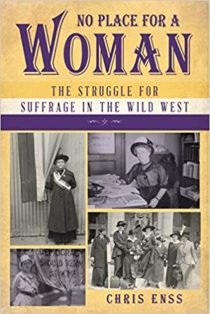
No Place for a Woman:  The Fight for Suffrage in the Wild West.


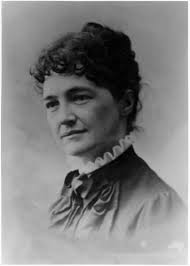
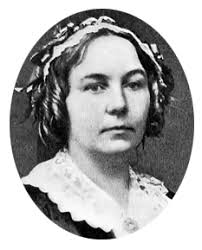
Born in Massachusetts in 1818 and educated at Oberlin College, Lucy Stone lectured widely against slavery and, on behalf of women’s suffrage, helped organize the first national women’s rights convention and the American Woman Suffrage Association and published the influential Woman’s Journal.

After graduating from Oberlin College in 1847, Stone became a lecturer for the Massachusetts Anti-Slavery Society, one of the leading abolitionist organizations of its time. Stone became convinced that parallels existed between the positions of women and slaves. In her view both were expected to be passive, cooperative, and obedient. In addition, the legal status of both slaves and women was inferior to that of white men. Stone persuaded the society to allow her to spend part of her time speaking on the topic of women’s rights. In 1850 she organized the first national Women’s Rights Convention in Worcester, Massachusetts.

In 1855 Stone married Henry B. Blackwell, an Ohio merchant and abolitionist. The couple entered into the marriage “under protest”; at their wedding they read and signed a document explicitly protesting the legal rights that were given to a husband over his wife. They omitted the word “obey” from the marriage vows and promised to treat each other equally. Stone also announced that she would not take her husband’s name and would be addressed instead as Mrs. Stone. This action drew national attention, and women who retained their maiden names were soon known as “Lucy Stoners.”

After the Civil War, Stone and Blackwell shifted their energies to women’s suffrage. Although Stone was in agreement with Elizabeth Cady Stanton and Susan B. Anthony on the goal of women’s suffrage, she differed as to the best way to secure the vote for women. In 1869 Stone helped form the AWSA. The AWSA worked for women’s suffrage on a state by state basis, seeking amendments to state constitutions. Stanton and Anthony established a rival organization, the NWSA, which sought an amendment to the U.S. Constitution similar to the Fifteenth Amendment that gave nonwhite men the right to vote. Whereas the AWSA concentrated on women’s suffrage, the NWSA took a broader approach, lobbying for improvements in the legal status of women in areas such as family law as well as for suffrage.

Stone also helped found the Woman’s Journal, a weekly suffrage journal, in 1870. She edited the journal for many years, eventually turning the task over to her daughter, Alice Stone Blackwell, in 1882. As editor, Stone focused on the AWSA’s goal of suffrage.

In 1890 the AWSA and the NWSA merged into the NAWSA. Stone became the chair of the executive committee, and Stanton served as the first president.


To learn more about how women won the right to vote in the West read

No Place for a Woman

Visit www.chrisenss.com to enter to win a copy of No Place for a Woman.

Elizabeth Cady Stanton: Not For Ourselves Alone

Enter now to win a copy of the new book

No Place for a Woman:  The Fight for Suffrage in the Wild West.


Elizabeth Cady Stanton, who signed the first call for a woman’s rights convention in the United States, was born in Johnstown, New York, on November 12, 1815. She was the daughter of Judge Daniel Cady and Margaret Livingston Cady, both persons of exceptional educational refinement. As a child Elizabeth displayed unusual intelligence and began her education at Johnstown Academy. After finishing the coursework at her homeschool, she went to Mrs. Emma Willard’s seminary in Troy, New York, where she was graduated in 1822.

In 1839 she met Henry Brewster Stanton, an anti-slavery orator of some note, and in 1840 they were married. Immediately after their wedding they went to London where the international anti-slavery convention was to be held.

Mrs. Stanton was one of the delegates from America but was denied participation in the proceedings because she was a woman. While in London she met Lucretia Mott and with her signed the first call for a women’s rights convention. Returning to Boston, Mr. and Mrs. Stanton made their home there until Mr. Stanton was compelled to move to Seneca Falls, New York, because of his health. It was in Seneca Falls on the 19th and 20th of July 1848, in the Wesleyan chapel, that the first women’s rights convention was held. Mrs. Stanton was at the head of the movement at that time and, besides caring for the delegates, wrote the declaration of aims which became the subject of ridicule and jest throughout the United States.

From 1867 to 1874 she went from state to state campaigning for woman’s suffrage and became associated with numerous organizations having that end in view. She became a candidate for Congress from the Eighth New York District, having the support of the New York Herald. She became associated in the management of the resolution with Susan B. Anthony and was the joint author of many books on woman’s suffrage.


To learn more about how women won the right to vote in the West read

No Place for a Woman

Visit www.chrisenss.com to enter to win a copy of No Place for a Woman.


WWHA Journal Review of According to Kate


In the acknowledgments from the book According to Kate, I wrote that “writing this book has been a lesson in uninterrupted anguish.”  I was apprehensive about tackling her story because I just knew there would be a barrage of criticism from historians and Earp-family enthusiasts.  Indeed, there was a fair share of that behavior to contend with once the book was released.  My good friend Stuart Rosebrook, senior editor at True West Magazine, help me through much of the aggravation early on.  Earlier this month I learned that According to Kate won the Academy of Western Artists Elmer Kelton Book Award and on Friday, Kate was listed among the best biographical books in 2019 by Foreword Review Magazine.  The other nine books in the category all feature men and women who were WWII heroes, civil rights heroes, and celebrated artists.  And then there’s Kate.  A prostitute whose claim to fame was being in love with a tuberculosis suffering dentist turned gambler and gunfighter.

Today, I was notified of a review of According to Kate that appeared in the March edition of the Wild West History Association journal.  Kate received praise from the reviewer and I couldn’t be happier for her.  Kate Elder’s story of her life on the frontier as a soiled dove and her time with one of the West’s most recognizable characters has value.  She was strong willed.  She made as much money as possible as fast as she could, spent it just as quickly, and outlasted most sporting gals of that time.  She was known by several names throughout her life.  Kate Elder, Kate Fisher, Big-Nose Kate, Mrs. J. H. Holliday, and Mary K. Cummings were a few of the most common titles.  According to Kate, “I’ve been called many things.  Some not so kind.  I only ever cared what those I loved called me.” Not a bad attitude to have as a harlot and critic of Old West royalty.

Good for you, Kate.


Pioneer Suffrage Advocates: Lucretia Coffin Mott

Enter now to win a copy of the new book

No Place for a Woman:  The Fight for Suffrage in the Wild West.


Lucretia Coffin grew up in Boston, where she attended public school for two years in accordance with her father’s wish that she become familiar with the workings of democratic principles. At age thirteen she was sent to a Friends (i.e., Quaker) boarding school near Poughkeepsie, New York, where two years later she was engaged as an assistant and later as a teacher. It was then that her interest in women’s rights began. Solely because of her sex, she was paid only half the salary male teachers were receiving.

In 1811 she married James Mott, a fellow teacher from the school, and the couple moved to Philadelphia. About 1818 Lucretia Mott began to speak at religious meetings, and three years later she was accepted as a minister of the Friends. She joined the Hicksite (Liberal) branch of the Society of Friends when a rift occurred in the 1820s, and in that decade, she began to travel about the country lecturing on religion and questions of social reform, including temperance, the abolition of slavery, and peace.

In 1833 Mott attended the founding convention of the American Anti-Slavery Society, and immediately thereafter she led in organizing its women’s auxiliary, the Philadelphia Female Anti-Slavery Society, of which she was chosen president. She met opposition within the Society of Friends when she spoke of abolition, and attempts were made to strip Mott of her ministry and membership. In 1837 she helped organize the Anti-Slavery Convention of American Women, and in May 1838 her home was almost attacked by a mob after the burning of Pennsylvania Hall, Philadelphia, where the convention had been meeting. Rebuffed as a delegate to the World’s Anti-Slavery Convention in London in 1840 because of her sex, Mott still managed to make her views known.

In 1848, taking up the cause of women’s rights, she and Elizabeth Cady Stanton called a convention at Seneca Falls, New York, the first of its kind “to discuss the social, civil, and religious rights of women.” The convention issued a “Declaration of Sentiments” modeled on the Declaration of Independence; it stated that “all men and women are created equal.” From that time, Mott devoted most of her attention to the women’s rights movement. She wrote articles (“Discourse on Woman” appeared in 1850), lectured widely, was elected president of the 1852 convention at Syracuse, New York, and attended almost every annual meeting thereafter. At the organizing meeting of the American Equal Rights Association in 1866, she was chosen president. The following year she joined Robert Dale Owen, Rabbi Isaac M. Wise, and others in the organization of the Free Religious Association.

A fluent, moving speaker, Mott retained her poise before the most hostile audiences. After the Civil War she worked to secure the franchise and educational opportunities for freedmen; since passage of the Fugitive Slave Law in 1850, she and her husband had also opened their home to runaway slaves escaping via the Underground Railroad. She continued to be active in the causes of women’s rights, peace, and liberal religion until her death. Her last address was given to the Friends’ annual meeting in May 1880.


To learn more about how women won the right to vote in the West read

No Place for a Woman

Visit www.chrisenss.com to enter to win a copy of No Place for a Woman.


Susan B Anthony – Failure is Impossible

Enter now to win a copy of the new book

No Place for a Woman:  The Fight for Suffrage in the Wild West.


Susan B. Anthony was born on February 15, 1820, in Massachusetts and began her work as a woman’s rights leader before the Civil War.

Possibly no woman ever lived who gave so many years of active work to a reformatory measure and so well retained her vitality as did Susan B. Anthony. Friends and acquaintances said she was a gentle woman who went up and down the country for two generations demanding that women be allowed to vote.

Anthony made her home in Rochester, New York. It was there she met many leading abolitionists, including Frederick Douglass, Parker Pillsbury, Wendell Phillips, William Henry Channing, and William Lloyd Garrison. Soon the temperance movement enlisted her sympathy and then, after meeting Amelia Bloomer and through her Elizabeth Cady Stanton, so did that of woman suffrage.

The rebuff of Anthony’s attempt to speak at a temperance meeting in Albany in 1852 prompted her to organize the Woman’s New York State Temperance Society, of which Stanton became president, and pushed Anthony further in the direction of women’s rights advocacy. In a short time she became known as one of the cause’s most zealous, serious advocates, a dogged and tireless worker whose personality contrasted sharply with that of her friend and coworker Stanton. She was also a prime target of public and newspaper abuse. While campaigning for a liberalization of New York’s laws regarding married women’s property rights, an end attained in 1860, Anthony served from 1856 as chief New York agent of Garrison’s American Anti-Slavery Society.

During the early phase of the Civil War, she helped organize the Women’s National Loyal League, which urged the case for emancipation. After the war she campaigned unsuccessfully to have the language of the Fourteenth Amendment altered to allow for woman as well as African American suffrage, and in 1866 she became corresponding secretary of the newly formed American Equal Rights Association. Her exhausting speaking and organizing tour of Kansas in 1867 failed to win passage of a state enfranchisement law.

In 1868 Anthony became publisher, and Stanton editor, of a new periodical, The Revolution, originally financed by the eccentric George Francis Train. The same year, she represented the Working Women’s Association of New York, which she had recently organized, at the National Labor Union convention. In January 1869 she organized a woman suffrage convention in Washington, D.C., and in May she and Stanton formed the NWSA. A portion of the organization deserted later in the year to join Lucy Stone’s more conservative AWSA, but the NWSA remained a large and powerful group, and Anthony continued to serve as its principal leader and spokeswoman.

In 1870 she relinquished her position at The Revolution and embarked on a series of lecture tours to pay off the paper’s accumulated debts. As a test of the legality of the suffrage provision of the Fourteenth Amendment, she cast a vote in the 1872 presidential election in Rochester, New York. She was arrested, convicted (the judge’s directed verdict of guilty had been written before the trial began), and fined, and although she refused to pay the fine, the case was carried no further. She traveled constantly, often with Stanton, in support of efforts in various states to win the franchise for women: California in 1871, Michigan in 1874, Colorado in 1877, and elsewhere.

In 1890, after lengthy discussions, the rival suffrage associations were merged into the NAWSA, and after Stanton resigned in 1892, Anthony became president. Her principal lieutenant in later years was Carrie Chapman Catt.

By the 1890s Anthony had largely outlived the abuse and sarcasm that had attended her early efforts, and she emerged as a national heroine. Her visits to the World’s Columbian Exposition in Chicago in 1893 and to the Lewis and Clark Exposition in Portland, Oregon, in 1905 were warmly received, as were her trips to London in 1899 and Berlin in 1904 as head of the U.S. delegation to the International Council of Women (which she helped found in 1888). In 1900, at age eighty, she retired from the presidency of the NAWSA, passing it on to Catt. Anthony died in 1906, fourteen years before the Nineteenth Amendment was ratified.


To learn more about how women won the right to vote in the West read

No Place for a Woman

Visit www.chrisenss.com to enter to win a copy of No Place for a Woman.


Abolitionists & Suffragists

Enter now to win a copy of the new book

No Place for a Woman:  The Fight for Suffrage in the Wild West.


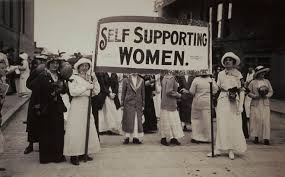
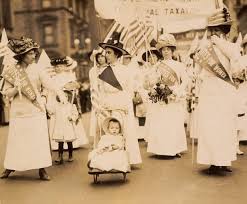
The movement for woman suffrage, which began in 1846, was for a time overshadowed by the abolition movement. Virtually all women’s rights advocates supported abolition, but not all abolitionists supported woman suffrage. Numerous abolitionists believed it was inappropriate for women to engage in public political actions. Feeling that their servitude was more deplorable than the political, legal, and economic disabilities of the women of the United States, many women suffragists gave their time, energy, and money to the freeing of African Americans.

When the Civil War had ended, and the Fourteenth Amendment was under discussion, Susan B. Anthony, Elizabeth Cady Stanton, and other leaders learned with amazement and indignation that it was proposed to put the word “male” in the Constitution of the United States, which before that time had not discriminated against women. The suffragists immediately petitioned Congress. When the Thirteenth Amendment abolishing slavery was pending, the women had been encouraged by both Republicans and abolitionists to send petitions to Congress. They collected more than three hundred thousand names. Several Republican senators applauded the efforts of women everywhere and told them, “You are doing a noble work.” However, when the women petitioned for their own rights, they received little sympathy and much active opposition.

Republicans had declared that suffrage was a natural right belonging to every citizen who paid taxes and helped support the state and that the ballot was the only weapon by which one class could protect itself against the aggression of another. Despite this, the Republicans failed to help the women in favor of the abolitionist movement. Many abolitionists refused to sign the women’s petition, saying, “This is the African American’s hour.” African American men warned that “women must not block our chance, lumbering the Republican Party with woman suffrage.”


To learn more about how women won the right to vote in the West read

No Place for a Woman

Visit www.chrisenss.com to enter to win a copy of No Place for a Woman.


The Suffragents

Enter now to win a copy of the new book

No Place for a Woman:  The Fight for Suffrage in the Wild West.


In 1911, actress, playwright, and “suffragette” Vida Sutton coined the term “suffragent.” A suffragent referred to a man who was big enough to see that women should be given the right to vote. “This type of man is one of the most powerful allies of the cause of women,” Vida explained to a reporter for the New York Times. “He not only does not hinder but does all that he can to help.”

From the time the woman suffrage movement was first launched in 1846, there were many prominent suffragents who played significant roles in helping women secure the right to vote.  At the urging of Elizabeth Cady Stanton, California senator Aaron Augustus Sargent introduced the first federal woman suffrage amendment in 1878. The amendment was reintroduced in every succeeding Congress until adopted in 1920. “I believe the time is rapidly coming when all men will conclude that it is no longer wise or judicious to exclude one half of the intelligence and more than one half of the virtue of the people from the ballot box,” Sargent remarked in April 1878.

San Francisco mayor Adolph Sutro echoed those sentiments in March 1896. “I believe equality is the basic principle of our government—hence women should assume all the responsibilities that arise out of her moral and mental endowments as a citizen,” Sutro told the San Francisco Chronicle. “Woman’s advent as a voter will be the means through which the government may be perpetuated, as embodying justice, equality, and righteousness.”

Frederick Douglass, American abolitionist, orator and lecturer, was present at the Seneca Falls Women’s Rights Convention of 1848 and advocated for women’s rights along with abolition and the rights of African Americans. At a meeting of the National Council of Women in 1895, he reminded an enthusiastic crowd of what he had written about the issue in 1848. “A discussion of the rights of animals would be regarded with far more complacency by many of what are called the wise and the good of our land than would be a discussion of the rights of women. . . . We hold women to be justly entitled to all we claim for man.”


No Place for Woman Book Cover


To learn more about how women won the right to vote in the West read

No Place for a Woman

Visit www.chrisenss.com to enter to win a copy of No Place for a Woman.


Legacy: From Seneca Falls to the League of Women Voters

Enter now to win a copy of the new book

No Place for a Woman:  The Fight for Suffrage in the Wild West.


The watershed year of 1848, in the strife-filled period before the American Civil War, saw the rise of women at Seneca Falls who declared that they were equal to men and not just worthy of the vote—deserving of it by the divine right of being human and citizens. Of course, while that organized group was determined to fight for the equality of women, they were fighting at a time when the equality of all people was the central question of the day. The denial of rights to women and blacks (freed and slave) was incongruous with the enlightenment ideals of democracy and the hopes of a new republic—but those in charge of the new republic were having a tough time seeing past the blinders of their race and sex.

During and immediately after the Civil War, many abolitionists and suffragists worked together toward the common goal of ending slavery, and in 1866, after the end of the war, Elizabeth Cady Stanton and Susan B. Anthony formed the American Equal Rights Association intending to continue the fight for voting and civil rights for all citizens.  That was when things got complicated.

As part of the process of reconstructing the Confederate states into the Union, Congress became absorbed in passing the Fourteenth and Fifteenth Amendments to the Constitution, amendments that defined both who qualified for citizenship regardless of race and sex and that drew criteria for who could vote in elections. The interpretation of the language in both amendments drew challenges from all sides—and ultimately split the previously strong movement in favor of suffrage for all former slaves and women into factions who were in favor of the political expedience of allowing males of African descent the right to vote regardless of their previous state of servitude while letting women’s interest be pushed to the side.

But the split was more complicated than that. In the late 1860s, a further division erupted between women’s suffrage advocates after the Fourteenth and Fifteenth were the law of the land. The faction led by Elizabeth Cady Stanton and Susan B. Anthony favored taking swift action to enact national woman suffrage through yet another constitutional amendment. The faction led by Lucy Stone, Henry Blackwell, and Julia Ward Howe—once staunch allies of Stanton and Anthony in the struggle for suffrage and the end to slavery—favored using the clause of the Fifteenth that gave the states the right to decide who could vote. They wanted to approach the woman suffrage issue one state at a time.


No Place for Woman Book Cover


To learn more about how women won the right to vote in the West read

No Place for a Woman

Visit www.chrisenss.com to enter to win a copy of No Place for a Woman.


War Work and National Suffrage

Enter now to win a copy of the new book

No Place for a Woman:  The Fight for Suffrage in the Wild West.


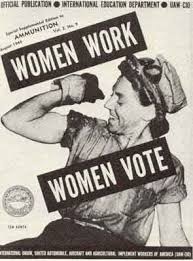
Among the busy men sitting at rows of welding machines at the Standifer-Clarkson Shipyard in Vancouver, Washington, in 1917, were several equally busy women. All were dressed in drab gray or brown clothing, work boots, heavy canvas aprons, and off-white, triangular scarves covered their heads. Sparks flew from the metal pieces being fused together to be used to build ships that would be dispatched to fight in the war in Europe. The assassination of Archduke Franz Ferdinand of Austria-Hungary in June 1914 propelled the major European military powers toward war. Gavrilo Princip, a Yugoslav nationalist, was responsible for Ferdinand’s death. His actions prompted Austria-Hungary to declare war on Serbia. European nations aligned themselves with the side of the argument they favored, and fighting ensued for more than three years before the United States entered the conflict. Germany’s atrocities during this time forced the United States to declare war on the country in April 1917. Hundreds of thousands of American men were enlisted to fight, leaving numerous vacancies in the workforce. Women were recruited to fill those positions. Some of those positions were in shipyards such as the Standifer-Clarkson Shipyard.

Despite the prevailing idea among traditionalists that women should stay out of the workforce, World War I made the need for labor so urgent that women were hired in record numbers. In addition to taking jobs in department stores, railroads, and with the postal department, women answered the call to be employed as police officers, firefighters, munitions workers. By the spring of 1918, munitions factories were the largest employer of American women.

When it came to serving their country, women proved they were equal to men. The employment of women supported the war. Women worked not only as nurses but also as ambulance drivers, in steel mills, and in the textile industry. Women across the nation were doing their part to help. Although some political leaders recognized their contributions and were grateful, they still were not convinced granting women the vote was right for the country.

By the time the United States had entered World War I, all the western states had achieved women’s suffrage at some level, but securing the right for women to vote in every state continued to be a struggle. The comments about that struggle by Lucy Burns, a leader of the NWP, were echoed by women everywhere. “It’s unthinkable that a national government which represents women should ignore the issue of the right of all women to be politically free,” Burns noted. Regardless of the battle being fought abroad, key suffragist leaders such as Harriot Stanton Blatch (daughter Elizabeth Cady Stanton), Alice Paul, and Lucy Burns believed women needed to continue to fight for their rights on the home front.


No Place for Woman Book Cover


To learn more about how women won the right to vote in the West read

No Place for a Woman

Visit www.chrisenss.com to enter to win a copy of No Place for a Woman.

The March Across the Great Plains

Enter now to win a copy of the new book

No Place for a Woman:  The Fight for Suffrage in the Wild West.


From 1912 to 1920, the voting map shifted with astonishing rapidity after the long years of the late nineteenth century when progress had seemingly stalled. The political exigencies of the Civil War and Reconstruction had made way for the reforming zeal of progressives at the turn of the twentieth century, and while war in Europe was on the horizon, the Gilded Age and industrialization had swept across the nation, allowing citizens a chance to participate in clubs and political organizations at a new level. And the expansion of states into the West had opened new opportunities for the people to have a voice in shaping laws. By 1912, decades had passed since the voters of Wyoming Territory had allowed women not only to step to the ballot box but also to appear on those ballots. Women all over the country had joined civic organizations in record numbers—the Woman’s Christian Temperance Union (WCTU), pro-suffrage organizations, as well as anti-suffrage organizations. The direst of predictions about what having masculine responsibilities would do to women had not come to fruition. Instead there had been a great awakening about the potential and abilities of the half of the population that had been silenced for so long.

In the West, where women found greater acceptance in the professions and demonstrated their grit amid the hardships of the frontier, the vote had happened quickly in the grand scheme of things. Perhaps the looser constraints of a less regimented social structure had contributed to women participating in all sorts of activities outside of their traditionally proscribed sphere, including political campaigns. Women worked for the candidates of their choice, for social reforms including the prohibition of alcohol, and for the vote. Their campaigns covered scattered voters stretched over millions of square miles—but the personal approach advocated by suffragists in some of the western states had proved to be effective. Women were lobbying their neighbors and their legislators personally to make the case for equality. And the public arm of the suffrage movement had gained hard-earned acceptance in many places.

Across the Great Plains, particularly in the middle West, the WCTU had reached its long fingers into the more organized churches, schools, and town structures crying for the reform that the vote could bring. Kansas passed a suffrage amendment in 1912, even before its wilder neighbors to the west, propelled by the reform zeal of women like Carrie Nation. Illinois followed in 1913. South Dakota had been debating and rejecting suffrage since its territorial days, but it would grant the vote to women in 1918, a year after its sibling North Dakota offered presidential suffrage to the women of that state. Nebraska also took the presidential route, giving women the right to vote for the man who would hold that office in 1917. Many other states opted for that introduction to the franchise for women, offering the chance to vote in presidential elections before the national amendment would grant the unlimited right in 1920. Illinois, Missouri, Minnesota, Wisconsin, Iowa, and other states east of the Mississippi were all beginning to push the door open in that way by 1919.

Part of the reason for the shift was that even before the Great War, women in the cities began entering the workforce in growing numbers, taking on jobs in numerous professional fields as well as continuing to work in the more traditionally feminine occupations. As a result, women’s economic status had undergone a significant transformation, and as skirt hems lifted, the arguments against the vote seemed to fall away. Politics—and the anti-progressive attitudes toward Prohibition and labor laws and social welfare programs—still stood in the way of equality, but the arguments against the vote became thinner and thinner.


No Place for Woman Book Cover

To learn more about how women won the right to vote in the West read

No Place for a Woman