The Trials of Annie Oakley

Enter now for a chance to win a copy of

The Will Rogers Medallion Award Winning book

The Trials of Annie Oakley


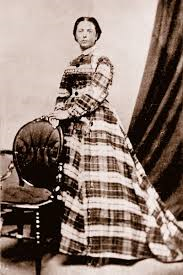
Say the name Annie Oakley and the image of a young woman who could shoot targets out of the sky without a miss and rode across the frontier with Wild West showman Buffalo Bill Cody comes to mind. Annie Oakley was a champion rifle shot and did perform alongside well-known riders, ropers, and Indian chiefs in Colonel Cody’s vaudevillian tour, but there was more to Annie Oakley’s fame than her skill with a gun. The diminutive weapons wonder was a strong proponent of the right to bear arms, a noted philanthropist, and warrior against libel who fought the most powerful man in publishing and won.

The native Ohioan astonished the world with her almost unbelievable feats of rifle marksmanship. She could pepper a playing card sailing through the air, puncture dimes tossed into the sky, and break flying balls with her rifle held high above her head. She once shot steadily for nine hours, using three sixteen-gauge hammer shotguns which she loaded herself, breaking 4,772 out of 5,000 balls.

Annie Oakley fell in love with and married the first man she defeated in a rifle match. Frank E. Butler was one of the most noted marksmen in the West and he and Annie were married for more than fifty years. The couple never had any children of their own. The reasons they were childless are varied and speculative at best. What is not without question is how Annie helped fund the care and education of orphaned children from coast to coast.

Annie Oakley was a combination of dainty, feminine charm and lead bullets, adorned in fringed handmade fineries and topped with a halo of powder blue smoke. She had a reputation for being humble, true, and law abiding and was careful with her character at all times. When powerful, newspaper magnate William Randolph Hearst challenged her honor and questioned her respectability in his publication in 1903, Annie filed a lawsuit against him that’s still discussed at universities today.


To learn more about the famous sure shot read

The Trials of Annie Oakley


Life After the Gunfight at the OK Corral

Tomorrow is the last day to enter to win a copy of

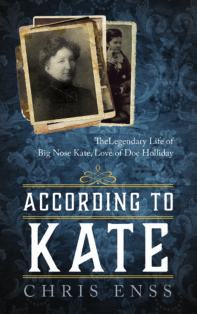
According to Kate: 

The Legendary Life of Big Nose Kate Elder, Love of Doc Holliday

along with a Kindle Paperwhite.


Kate Elder’s hotel in the remote copper and silver mining town of Globe, Arizona, was a small, unassuming establishment that catered to prospectors, assayers, and occasionally outlaws.  For twenty-five cents a night, guests were offered a clean room complete with a wash bowl, towel, chamber pot, and a pitcher of fresh water.  For an additional ten cents, Kate would provide breakfast.  Patrons were served in the saloon in the front of the building located a short distance from Alice Gulch, the site of the first silver claim.

In late December 1881, a merchant named Mrs. Alonzo Bailey escorted a potential boarding house customer into the saloon where the last of the regular guests were finishing their morning meal.  According to Kate, although it was past the time to serve food, the pair made themselves comfortable at a table and ordered coffee.  The gentleman accompanying Mrs. Bailey was carrying a copy of the Tombstone Epitaph, and, when Kate approached the duo with coffee cups and coffee pot, the man began to discuss the incident that had occurred at the OK Corral the previous month.  “Some how Doc and I were mentioned,” Kate noted when sharing the story with her niece several years later.

Kate noted she didn’t say a word about the happenings in Tombstone; she simply poured the coffee and went about the business of clearing the dishes.  The chatty customer continued with his thoughts about the location of the gunfight and the people involved in the incident.  “There are so many that claim they saw the shooting on Allen Street,” Kate wrote her niece in March 1940, “It was not on Allen Street but nearer Freemont [sic] Street in an open lot.”

Kate invited Mrs. Bailey and her friend to help themselves to the bacon and eggs sitting on the buffet table near a stack of plates, forks, and knives.  The man reluctantly set the newspaper aside to get a plate of food but never stopped talking.  “He told Mrs. Bailey that Doc took me to New Mexico and killed me up in the mountains and that he helped to bury me,” Kate recalled.  “That poor woman,” I remarked.  “Mrs. Baily [sic] and I laughed but when the man found out he made a fool of himself he never came back.  But it is laughable how some people will talk.  I often laugh how often I have been dead and buried and turn up some place full of life.”


To learn more about Kate Elder read

According to Kate: 

The Legendary Life of Big Nose Kate Elder, Love of Doc Holliday.

Street Fight in Tomstone

Three days left to enter to win a copy of the book

According to Kate: The Legendary Life of Big Nose Kate Elder, Love of Doc Holliday

along with a Kindle Paperwhite.


It was a chilly evening in mid-March 1881.  Kate had traveled from Globe to Tombstone to see Doc.  According to her, she had made the trip at his request.  She noted in her memoirs that they lost no time settling their differences.  The smoke from an oil lamp in his room coiled wraith-like to the ceiling, smirching the cobwebs that festooned the top of the faded curtains.  Kate studied the sad looking, window coverings in the reflection of the mirror into which she was staring.  She had been pinning her hair up and playing with a pair of earrings when she noticed the breeze from the partially opened window ruffle the curtains.  Kate anticipated spending a great deal of time with Doc in the room and pondered whether to update the décor.

Doc had taken up residence on Sixth Street in a small boarding house positioned between a funeral parlor and a winery.  The furnishing was sparse and covered with dust.  Kate’s things were scattered about the room.  Doc had promised to take her to dinner when he returned from the errand he had rushed off to handle.  Once she finished getting ready for the night out she turned her attention to a copy of the Arizona Weekly Citizen lying on a chair by the door.  A story about a murder and an attempted stage robbery twenty-eight miles from Tombstone caught her eye.

“Detective R. H. Paul was on the box with the driver at the time, and his double-barreled Winchester rested by his side,” the March 20, 1881, article noted.  “It is believed that the Cow-boys were completely surprised to find Paul upon the stage, as no two of them would attempt to tackle Paul.  At the first word, ‘Hold!’  Paul coolly reached for his gun, exclaiming, ‘By God!  I hold for nobody!’  It is a question who fired first, Paul or the robbers; but the crack of the rifles were almost simultaneous, frightening the leaders into a run.  Paul emptied both barrels of his gun, and his revolver, while the stage was rattling along as fast as the horses could haul it.  The driver had fallen dead from the box, and a passenger who was upon the box was dying with a mortal wound.  As soon as Paul could regain the lines that had fallen from the hands of Bud Philpot, who was shot through the heart, he drove and transferred Wells, Fargo & Co.’s box and the United States mail intact to J. D. Kinnear, the agent of the line at Benson, and the frightened passengers were sent through to Tombstone.  Paul then started back, accompanied by four men, to the scene of the attack.  Later particulars are awaited here with great interest.

“A vigilance committee was lately formed at Tombstone, backed by all the money necessary to take these parties in hand and teach them a lesson.”


To learn more about Kate read

According to Kate:  The Legendary Life of Big Nose Kate Elder,

Love of Doc Holliday


Leaving Las Vegas

Enter now to win a copy of the book

According to Kate:

The Legendary Life of Big Nose Kate Elder, Doc Holliday’s Love

and a Kindle Paperwhite.


The main street of Las Vegas, New Mexico, was so crowded the passing streams of people moved as if unseen hands were dragging them this way and that.  In addition to the throngs of people crossing back and forth across the dusty thoroughfare, there were teams of horses pulling buckboards and business buggies, cowhands leading their mounts to the livery, and ranchers hauling supplies in and out of town.  Kate and Doc added to the chaos when they arrived just before Christmas 1878.  After tending to their rides and securing a room at the Adobe Hotel in Gallinas Canyon north of the central plaza of town, Kate put Doc to bed.  He was coughing a wet cough that produced enough blood to saturate a handkerchief.  Doc wasn’t the only tuberculosis sufferer in Las Vegas.  Many patients had gathered in the New Mexico location.  Dry air and rest were the only remedies for the disease.  Sometimes bundled in blankets and sheltered from precipitation, patients there endured outdoor life in all weather, hoping the regimen would heal their damaged lungs.

Tuberculosis patients also sought to rid themselves of the disease by soaking in the hot springs six miles northwest of town.  The September 30, 1878, edition of the Daily Gazette noted that the hot springs near Las Vegas contained the same mineral constituents as those in Hot Springs, Arkansas, and Thermal Springs in Europe.  Frontier physicians recommended soaking in the calcium and sodium enriched hot springs because the bicarbonates boosted blood circulation, reduced pain, and repaired tissue damage.  According to Kate, she tried to convince Doc to consider staying put until his health was somewhat restored.  She hoped he would take advantage of the hot springs and the rest.  The attack he had in Dodge City had left him weak and unsteady on his feet.  Kate promised to provide for them both while he was recovering, but Doc refused to go along with her plan.

As soon as Doc was able, he located office space on Bridge Street and opened his practice.  Las Vegas was a stopping point for those traveling along the Santa Fe Trail, it was the biggest city between San Francisco and Independence, Missouri.  Doc anticipated there would be many people in need of a dentist.  The army post, Fort Union, was twenty miles north of Las Vegas, and soldiers routinely spent time in town enjoying the nightlife.  If Doc’s practice faltered for any reason, he could also sustain himself at the poker table.  Las Vegas continually played host to cavalrymen, desperados, and outlaws looking for a fast game.  The number of card players eager to be separated from their money swelled when the Atchison, Topeka, and Santa Fe Railroad reached the area.  Before Doc had an opportunity to fully fleece amateur card sharps, the New Mexico territorial legislature passed a bill prohibiting gambling.  The law didn’t stop Doc from dealing, however; he kept his games of chance quiet while maintaining the semblance of an upstanding citizen as the community’s respectable dentist.


To learn more about Kate read

According to Kate:  The Legendary Life of Big Nose Kate Elder,

Doc Holliday’s Love


Doc Holliday & Kate Elder in Dodge City

According to Kate:  The Legendary Life of Big Nose Kate Elder,

Doc Holliday’s Love is available in bookstores everywhere.


A hot wind ushered Kate and Doc into Dodge in late May of 1878.  The sun’s rays were like the flames of a furnace blasting down on the parched path leading into the city.  The cow town had grown substantially in the short time Kate had been away.  Dodge was never lacking with activity, but now it was a dizzying array of action.  Hack drivers spurred their vehicles up and down the street at a rapid pace, unconcerned with the pedestrians who were forced to jump out of their way.  Harlots stood outside the doorways of their closet-sized dens, inviting passersby to step inside.  Stray dogs wandered about barking and scrounging for food.  Ranch hands led bawling livestock into corrals or railroad cars.  Disorderly drifters made their way to lively saloons, firing their pistols in the air as they went.

The distant sound of voices, back-slapping laughter, profanity, and a piano’s tinny repetitious melody wafted down Dodge City’s thoroughfare.  Kate and Doc were too tired to consider taking part in the liveliness and pressed on toward the Dodge House hotel which was adjacent to a billiard hall and restaurant.  The well-known establishment would be their home for as long as they chose to stay in town.

Dodge was just as Kate remembered it, only more so.  It was an all-night town.  Walkers and loungers kept the streets and saloons busy.  Residents learned to sleep through the giggling, growling, and gunplay of the cowboy consumers and their paramours for hire.  Kate and Doc were accustomed to the nightly frivolity and clatter.  They were seldom disturbed by the commotion.  Doc had no trouble falling asleep after the long, hard ride.  Kate, on the other hand, decided to take a position on the balcony of the hotel to make sure no one with any ill feelings toward Doc had followed the pair from Texas.  She would rest only after it seemed Doc was safe.

According to Kate, she and Doc were registered at the Dodge House as Mr. and Mrs. Holliday.  Doc set up a dental practice in the large room the pair occupied at the hotel.  There were three doctors living in Dodge City at the time; none were dentists, although in an emergency they had removed a bothersome tooth or two.  Doc received many referrals from the physicians in town, and his patient list had grown.  To help the practice along, he placed an ad in the June 27, 1878, edition of the Dodge City Times.

“Dentistry.  J. H. Holliday, Dentist, very respectfully offers his professional services to the citizens of Dodge City and surrounding country during the summer.  Office at Room No. 24, Dodge House.  Where satisfaction is not given money will be refunded.”


To learn more about Kate read

According to Kate:  The Legendary Life of Big Nose Kate Elder,

Doc Holliday’s Love


Kate Elder Sets the Record Straight

According to Kate:

The Legendary Life of Big Nose Kate Elder, Doc Holliday’s Love

now available in bookstores everywhere.


“As a keen reader and student of western American history, it was a pleasure reading this book. Chris Enss has done a true service in documenting fact and debunking fiction in the many tales about “Big Nose Kate.” The book is able to vividly portray not only the life of Kate, but to put in the perspective of the often-difficult struggles of living in the new and expanding raw west of her times. It includes excellent descriptions of the various towns springing into existence with minimal social constraints during this dramatic time in our history. It is well worth adding to your library of western lore!”  Dave Vickery – Goodreads


Enter to win a copy of According to Kate along with a Kindle Paperwhite

when you visit www.chrisenss.com

Riding with Doc Holliday

Enter now to win a copy of the book According to Kate:

The Legendary Life of Big Nose Kate Elder, Doc Holliday’s Love

Along with a Kindle Paperwhite.


The main thoroughfare of Sweetwater, Texas, was so crowded with hunters, trappers, wagons, teams of horses, and soldiers that passing streams of people jostled each other, and some walked shoulder to shoulder.*  The air was charged with excitement.  Rumors that Tom Sherman, Kate Elder, Mollie Brennan, and the other five members of the Seven Jolly Sisters were on their way had caused a mild panic, and lonely men desperate for female companionship had flocked to the burg.

Sweetwater was a trading post along the Jones Plummer Trail.  That trail was connected to the major cattle drive town of Dodge City.  Sweetwater was a destination for bullwhackers, buffalo skinners, and cowhands.  Troops from Fort Elliott, eleven miles from town, enjoyed time at Sweetwater, too.  The fort was established [in 1875] to protect the buffalo traders from being raided by Indians.

For Kate, the busy town provided a fresh crush of people to meet and with whom to do business.  Soiled doves relished a change of scenery from time to time.  They liked the possibility of enticing new patrons in a different location.  It also brought renewed business when sporting girls returned to the town where their house of ill repute was located.

The August 24, 1876, edition of the Dodge City Times described the setting where Kate and the other entertainers arrived as a “thriving hamlet overrun with tradesmen.”  Fourteen wagon loads of buffalo hides for a general outfitter in Dodge City known as Chas. Rath & Co. lined the sides of the dusty roadways.  A report that a band of twenty-one hundred Indians south of Sweetwater had been spotted rattled some of the citizenry, but, as long as the soldiers remained in town, panic was abated.

Tom Sherman and his help erected a canvas tent, set up a makeshift -stage, and the Seven Jolly Sisters went to work.  Among the many individuals who spent time with Sherman’s employees was a twenty-three-year-old buffalo hunter and army scout named Bat Masterson.  In late 1875, Bat had taken a job as a faro dealer at the Lady Gay Saloon.  After Sherman’s outfit arrived, Bat could either be found in the saloon or with Mollie Brennan.

On January 24, 1876, Kate and Mollie concluded their dance routine and set off to explore additional business.  They ventured to the Lady Gay for a drink.  The two ladies met Bat at the bar, and he bought them a drink.  Once their drinks were finished, Bat and Mollie retired to his room.  Kate recalled the couple hadn’t been gone long when Sgt. Melvin A. King, one of the men with whom Bat had been playing cards earlier in the evening, charged toward Bat’s room.  King was furious with Bat over what he perceived as “underhanded dealings.”  With a loaded gun in hand, King pounded on Bat’s room door and waited for an answer.  Assuming it was Kate wanting to join the pair for a nightcap, Bat unlocked the door.  Sgt. King burst into the room and opened fire.  Mollie came between Bat and one of the bullets and was critically wounded.  Bat was shot in the pelvis, but he managed to grab his gun and kill King before collapsing.

Despite his best efforts, the local physician could not save Mollie.  An army surgeon was called to the scene to remove the bullet from Bat’s lower mid-section and stayed with him until he recovered.


To learn more about Kate read

According to Kate:  The Legendary Life of Big Nose Kate Elder,

Doc Holliday’s Love


Soiled Dove in a Cow Town

Enter now to win a copy of the book According to Kate:

The Legendary Life of Big Nose Kate Elder, Doc Holliday’s Love

Along with a Kindle Paperwhite.


In the winter of 1872, Wendell Phillips, orator, attorney, and the soul of John Brown marching on, delivered a lecture to a large audience of concerned citizens in St. Louis, Missouri, about the social cancer that plagued society.  He pounded the lectern he stood behind while addressing the crowd and advised them to take a stand against intemperance, crime, and prostitution.  Phillips was appalled that city officials had legalized the profession and were issuing licenses to the owners of houses of ill repute and the bawdy women who worked there.  Almond Street, a popular thoroughfare five blocks west of the riverfront, was the location of many of those houses.  It was Phillips’ hope that after the residents of St. Louis heard his fiery speech they would demand the businesses be closed.

“The root of this vice is poverty,” Phillips proclaimed.  “It is because the poverty of a certain class makes them the victims of the wealth and leisure of another.  Give one hundred men anywhere an honest career and a chance at the grand opportunities of life, and ninety out of the hundred will distain to steal.  Give one hundred women a fair chance at the grand opportunities that their brothers have and ninety out of the hundred will disdain to barter virtue for gold.”  Mary Katherine Horony, now known as Kate Fisher, was one of those near Almond Street who bartered virtue for gold.  Poverty had played a part in her decision to become a sporting woman, but she was satisfied the work possessed possibilities beyond money.  Kate was a business woman — nothing more, nothing less.

St. Louis had given Kate and other sporting women the opportunity to do their job without fear that law enforcement would interfere.  The “social evil ordinance” the city had passed in March 1870 not only required prostitutes to obtain licenses but also mandated business women to submit to medical exams testing for venereal diseases.  Civic leaders hoped the controversial ordinance would ultimately reduce the spread of disease.  Many opposed the idea, arguing that it “encouraged the very vice which all good men and women destined to see suppressed.”  Many soiled doves never bothered to register.  Kate was one of those women.

The spirited, Hungarian woman must have been able to take care of herself against intoxicated and belligerent clients.  Prostitutes sometimes found themselves in the company of men who resented their services.  They hated themselves for hiring sporting women and blamed those women for the ills of society.  A listing of arrests in daily, St. Louis papers showed how many acts of violence against prostitutes occurred nightly.  The August 29, 1872, edition of The Macon Republican contained information about the circumstances surrounding the beating deaths of more than ten, bawdy ladies in the area of Popular Street in St. Louis.

“Eleven wretched criminals victimized prostitutes overnight,” The Macon Republican article began.  “A man named Burklin shot a sinful woman when crazed with drink and jealousy; another killed a woman with a grubbing hoe; a third tossed the prostitute out a third story window; three were stabbed to death; the seventh prostitute was beaten to death with a soda water bottle; two were strangled; two were hanged by the neck with a rope.”


To learn more about Kate read

According to Kate:  The Legendary Life of Big Nose Kate Elder,

Doc Holliday’s Love


The Girl from Hungary

Enter now to win a copy of the book According to Kate:  The Legendary Life of Big Nose Kate Elder, Doc Holliday’s Love and a Kindle Paperwhite.


Kate Elder sat on the balcony of the Dodge House hotel in Dodge City, Kansas cradling a rifle in her lap.  It was a warm night in mid-June 1878.  She was wearing a white, cotton and lace slip dress that accentuated her curves and did little to cover her other assets.  The sound of an inexperienced according player squeezing out a tune mixed with the laughter from the patrons in the billiard hall next door filled the night air.

Kate studied a pair of drunken soldiers as they exited the billiard hall, climbed aboard their horses waiting for them, and rode off in the direction of Fort Dodge, the military post five miles east of town.  Once the soldiers were out of sight, she relaxed the hold she had on the gun and rubbed her tired eyes.  Kate had too much character in her face to be outright pretty, but she attracted men like flies.  At that moment, the only man’s affections she cared to attract were John Henry Holliday’s, a Georgia dentist and gambler prone to settle disagreements in a violent manner.

An unfortunate incident with the law had made it necessary for Kate and Doc to leave Fort Griffin, Texas, in a hurry and seek refuge in Dodge City.  Their abrupt exit from the southwestern cavalry fort had Kate worried the authorities would be searching for them and, when they were found, Doc would be made to return to answer for his wrongdoings.  Kate wasn’t going to let that happen.

Since arriving in Dodge City in late May 1878, Kate had reacquainted herself with the cow town where she’d lived and worked in 1875.  Dodge City was a wild burg that straddled the Santa Fe rails.  Cowpunchers found it to be the best place to end a drive.  The saloons were endless and always open.  Gamblers found numerous individuals to challenge, sporting women swarmed like bees, and bad men frequently sharpened their aim on citizens.  The men behind the badges in Dodge City were well-known Western figures.  Wyatt Earp, Bat Masterson, and Bill Tilghman all took a turn at maintaining law and order in the trigger-happy town.  How Kate Elder, from Pest, Hungary, came to be a fixture in a wide-open town primed with free-flowing money from the cattle trade and inundated by hordes of gunmen, outlaws, rustlers, and ladies of easy virtue was a question Kate pondered on a regular basis.

She shifted the gun in her lap and stared out at the massive, night sky and the stars that riddled the great expanse, contemplating a similar sky that hung over the steamer that brought her parents, brothers and sisters, and her from Bremen, Germany, to America when she was ten years old.  Kate remembered her life before when she was filled with hope and the promise of prosperity and success.


To learn more about Kate read

According to Kate:  The Legendary Life of Big Nose Kate Elder,

Doc Holliday’s Love


According to Kate

Enter now to win a copy of the book According to Kate:  The Legendary Life of Big Nose Kate Elder, Doc Holliday’s Love and a Kindle Paperwhite.


Kate Elder was a working girl.  Throughout most of her young life, she was employed as a soiled dove — a woman of ill fame, a sporting gal, a prostitute.  She wasn’t alone in that profession; hundreds of women entered the trade in the 1800s.  Some felt they had no other option but to become a lady of the evening, and others joined the fallen industry believing they could make a fortune capitalizing on the vices of intrepid cowboys and pioneers.

It was Kate’s relationship with John Henry (Doc) Holliday that brought her notoriety and lifted her out of the role as mere courtesan to that of common law wife to the well-known gambler, gunfighter, and dentist.

Kate’s story of her life on the frontier as a soiled dove and her time with one of the West’s most recognizable characters has value.  She was in her eighties when she dared to recall all that had transpired since leaving Hungary where she was born to the events leading up to the historic gunfight at the OK Corral.  There are those who insist that because of her age her recollections are faulty and that little of anything she said occurred the way she reported it.  I maintain it would be wrong not to share all the eighty-four-year-old Kate had to tell about an adventurous time in history merely because she was an octogenarian.  Some of us at fifty-seven can’t remember what day it is even though we’ve checked the calendar upwards of twenty times since starting work.  Yet, I can vividly recall that during seventh grade, music class Pam Green loudly pointed out that I was growing a mustache.  (It’s important to note here that I’m a woman, so this was extremely detrimental to my self-esteem at the time.)

According to Kate is a biography about the life and times of Kate Elder.  She would have written the book herself if a publisher would have been willing to pay her handsomely for her tale.  Kate believed her story was worth a great deal.  No one besides Kate saw it that way.  Throughout the book I’ve used all the information contained in Kate’s journals, personal letters, and interviews to tell of her life from her childhood in Hungary to her waning years at a retirement home for the elderly in Arizona.  Where some of her details were ambiguous, I used newspapers and historical documents to corroborate her story.


To learn more about Kate read

According to Kate:  The Legendary Life of Big Nose Kate Elder,

Doc Holliday’s Love