
Barker Gang Kidnaps Bank President
Enter to win a copy of
Ma Barker: America’s Most Wanted Mother
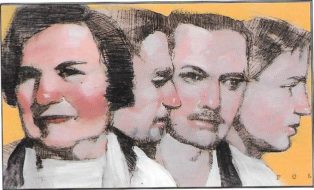
When the suggestion to kidnap Edward Bremer was presented to Ma, she ordered her crew to meet and discuss the proposal. In the summer of 1933, the Barker-Karpis Gang had kidnapped William Hamm, Jr., the president of Hamm’s Brewing Company. The caper was successful, yielding the gang $100,000 in cash for the return of the millionaire. News of the kidnapping was reported throughout the country. “Money or death was the ultimatum laid down by the culprits that absconded with Hamm’s Brewing Company executive,” the June 17, 1933, edition of the Albert Lea Evening Tribune read.
William had been captive near the same location in Bensenville, Illinois, where Edward Bremer was secured away. The police had withdrawn from the case at the request of the family. They were frightened of what might happen to William if law enforcement interfered. The ransom note from the abductors warned the Hamms that William would be shot and killed if the police were allowed any involvement. A note sent to William’s father instructed him to deliver the ransom money in “$5, $10, and $20 bills.” Payment of the ransom for the release of William, the kidnappers directed, was to be made using one of the company’s beer trucks. Not only did the Barker-Karpis Gang get the full amount they were asking in ransom, but when the authorities did begin investigating the kidnapping, a rival gang was arrested for the crime.
“J. Edgar Hoover himself announced from Washington that his men had put together a solid case against the Touhy gang,” Alvin Karpis wrote in his memoirs. “The scientific evidence left no doubt at all,” Hoover said, “that the Touhys were behind the kidnapping of William Hamm.”
The ease with which the Barker-Karpis Gang was able to get away with taking William and collecting the ransom was an argument for kidnapping Edward Bremer. In late December 1933, Ma’s boys convened at William Weaver’s apartment in St. Paul to talk through the details of the abduction. Who would trail Edward to learn about his habits, routine, friends, and work associates, who would write the ransom notes, who would deliver those notes to what contact, and when the job would be done were all determined. With the exception of Arthur, whom Ma suggested might have been a little too rough with the victim, everyone performed his duties as planned.
To learn more about the life and violent death of Ma Barker
and her sons read
Ma Barker: America’s Most Wanted Mother
This Day…
Ma Barker’s First Born
Enter to win a copy of the new book
Ma Barker: America’s Most Wanted Mother
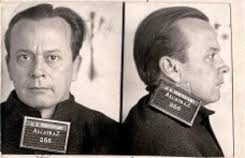
In a time when notorious Depression-era criminals were terrorizing the country, the Barker-Karpis Gang stole more money than mobsters John Dillinger, Vern Miller, and Bonnie and Clyde combined. Five of the most wanted thieves, murderers, and kidnappers by the Federal Bureau of Investigation (FBI) in the 1930s were from the same family. Authorities believed the woman behind the band of violent hoodlums that ravaged the Midwest was their mother, Kate “Ma” Barker.
Ma Barker removed a tattered handkerchief from the navy–blue pocketbook cradled in her lap and dabbed away a fake tear. The guards on duty at the Oklahoma prison were disinterested in her supposed grief. Their job was to make sure the inmates at the facility moved efficiently from the visitor’s area back to their cells. Ma watched a pale-faced, stupefied guard escort her son Arthur out of the room. It was mid-February 1920, and mother and son had concluded a short visit. A thick, long glass separated the convicts from the civilized world. Here, communication was done using plain, black phones minus a dial wheel, wired from one side of the glass to the other. Arthur and Ma each had their own receiver to talk through, as did several other families and friends visiting their loved ones through the glass partition.
The iron-barred doors clanged shut as the last prisoner was ushered out of the room. Ma sat stock-still until she heard the guard lock the door behind the inmates. As she turned to get up from her assigned seat, a heavyset guard approached her, and with flinty eyes, looked her up and down. She looked more frumpy than menacing. The coat she wore was big and bulky, frayed in spots, and a few buttons were missing. The tan, bell-shaped hat on her head had seen better days, and her hair underneath it was pinned back in a haphazard fashion. “My boys would be all right if the law would leave them alone,” she told the guard. He had no response and simply led her to the exit of the room, and she shuffled along as little old ladies do.
Two short siren blasts issued from the main building of the jail as Ma exited the complex. She glanced back at the other visitors following her and at the stone walls topped with snaky concertina wire overhead. Once every guest had left the jail, the heavy steel doors were closed behind them.
To learn more about Ma Barker and the Barker-Karpis Gang read
Ma Barker: America’s Most Wanted Mother
This Day…
1915 – American motion-picture actor and director Orson Welles was born in Kenosha, Wisconsin.
Ma Barkers: Ruthless & Daring
Enter to win a copy of
Ma Barker: America’s Most Wanted Mother
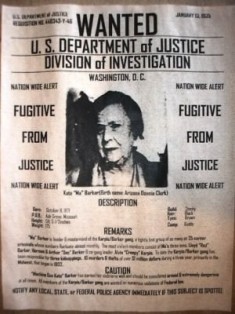
In a time when notorious Depression-era criminals were terrorizing the country, the Barker-Karpis Gang stole more money than mobsters John Dillinger, Vern Miller, and Bonnie and Clyde combined. Five of the most wanted thieves, murderers, and kidnappers by the Federal Bureau of Investigation (FBI) in the 1930s were from the same family. Authorities believed the woman behind the band of violent hoodlums that ravaged the Midwest was their mother, Kate “Ma” Barker.
Kate Barker marched her fifteen-year-old son, Herman, through the remains of a cornfield outside Webb City, Missouri. Using the collar of her boy’s shirt as a lead, she steered him past bent and weathered stalks of corn. It was a hot, humid, September afternoon, all white light and glare. Herman chanced a look back at his mother, hoping the scowl on her face had softened. Kate wore a gray sweater embellished with rhinestone buttons and a blue- and- white plaid rayon dress with a sashed belt and bow collar. Her hair was nicely coiffed with spit curls on each temple in the style of the times. Although she had been born and raised in the rural Ozark Mountains and married a miner from a nearby town, she was no house Frau. She carried her plump, five-foot four-inch frame with a confidence generally relegated to those with a wealthy, sophisticated background.
Herman was dressed in jeans and an old shirt two sizes too big for him. He was barefoot and occasionally grimaced when his toe connected with a jagged rock on the ground. His mother was furious with him and disinterested in how uncomfortable their fast-paced walk made him. Herman had been caught with a few wallets he’d stolen from the deacons of the local Presbyterian church. The preacher had graciously contacted Kate about the matter after he had informed the police. Mother and son now had an appointment with the Jasper County judge, and Kate was determined not to be late. Herman stumbled a time or two, but his mother jerked the boy to his feet and urged him on.
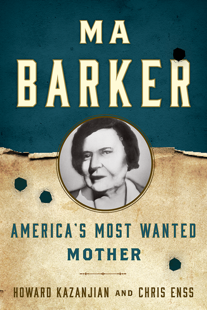
To learn more about the life and violent death of Ma Barker and her sons read
Ma Barker: America’s Most Wanted Mother
This Day…
1893 – Cowboy Bill Pickett invents bulldogging, the skill of grabbing cattle by the horns and wrestling them to the ground.
Ma Barker: America’s Most Wanted Mother
Enter to win a copy of the book
Ma Barker: America’s Most Wanted Mother
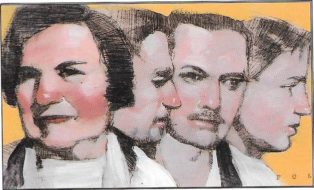
In a time when notorious Depression-era criminals were terrorizing the country, the Barker-Karpis Gang stole more money than mobsters John Dillinger, Vern Miller, and Bonnie and Clyde combined. Five of the most wanted thieves, murderers, and kidnappers by the Federal Bureau of Investigation (FBI) in the 1930s were from the same family. Authorities believed the woman behind the band of violent hoodlums that ravaged the Midwest was their mother, Kate “Ma” Barker.
It was a raw, gusty day in mid-January 1934 when bank president Edward G. Bremer dropped off his nine-year-old daughter, Betty, at Summit School in St. Paul, Minnesota. Parents and children dressed in heavy overcoats and wearing woolen hats hurried across the street and passed in front of Edward’s black Lincoln sedan on their way to the building. A light snow began to fall as he pulled away from the elementary school and headed toward his office. Edward was the president of the Commercial State Bank and traveled the same route to work every day. Each morning he waved goodbye to his little girl at 8:25 and proceeded to his job. He traveled along Lexington Avenue for a half hour, stopping at all the traffic signs along the way.
The car Edward drove was comfortable and warm, and cheerful music spilled from the radio as he contemplated the paperwork waiting for him on his desk. He cast a glance in his rearview mirror every so often but noticed nothing out of the ordinary. It wasn’t until Edward stopped at a stop sign and Alvin Karpis, a tall, slim man in a blue shirt streaked with mud, hurried to the driver’s side window holding a gun, that he considered anything was wrong. Edward was stunned and didn’t move as the armed man flung the driver’s side door open and shoved the weapon into his side. “Move over or I’ll kill you,” Alvin barked at him.
Before Edward had a chance to comply, the passenger’s side door of his car was jerked open, and Arthur “Doc” Barker leaned inside the vehicle. Arthur struck Edward on the head several times with the butt end of a .45 caliber automatic revolver. Blood from the gash sprayed the dashboard. Edward slumped in his seat, unconscious, and Alvin pushed him onto the floor. Arthur jumped inside the car and closed the passenger’s side door.
To learn more about Ma Barker and the Barker-Karpis Gang read
Ma Barker: America’s Most Wanted Mother.
This Day…
This Day…
1861 – U.S. President Lincoln issued an order to General Winfield Scott that authorized him to suspend the writ of habeas corpus between Philadelphia and Washington at or near any military line.