
Republic’s Drums of Fu Manchu

Enter now to win a copy of

Cowboys, Creatures and Classics: The Story of Republic Pictures
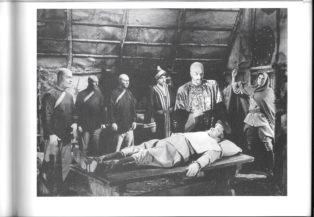
 

Between 1936 and 1956, Republic released a string of unique horror serials that promised audiences they would quake with fear when they came face to face with the studio’s terrifying lineup of ghouls, freaks of nature, and the walking dead.

Drums of Fu Manchu premiered in the spring of 1940. The creepy chapter play featured a race of bald-headed, fanged slaves known as “Dacoits” who had been lobotomized into doing the bidding of the immortal and insidious Doctor Fu Manchu. Fu Manchu hopes to conquer Asia and subsequently the world but needs specific artifacts from the tomb of Genghis Khan to achieve his goal. In Los Angeles, California, he convenes a meeting of the S-Far, an international conspiracy group that helps him draw up his plans. When archeologist Dr. James Parker is killed so Fu Manchu can obtain rare scrolls in his possession, his son Allan joins forces with Sir Denis Nayland Smith of the British Foreign Office to avenge his father’s death.

The sixteen frightful-looking “Dacoits” who contributed many of the thrills to Drums of Fu Manchu were a product of the makeup artist Bob Mark’s wizardry. The normal-looking people became grotesque monsters in Mark’s hands.

Rubber caps entirely covered their hair, giving them the impression of baldness. These caps, which could be worn only once, were especially manufactured at the cost of five dollars each. They were fitted tightly over the “Dacoit’s” heads, and heavy, theatrical grease paint was applied over them. The scars, which represented the incisions where Dr. Fu Manchu had removed the frontal lobes of their brain, were made of a special rubber composition and were held in place by rubber cement. The makeup of Fu Manchu himself, an elaboration of the “Dacoit’s” makeup, took exactly 2.5 hours each day to apply.

The fifteen-part Fu Manchu serial was directed by William Witney. He considered Fu Manchu to be his finest work. Sam Rohmer created the character of the insidious Fu Manchu in 1913 for a series of adventure novels. Rohmer’s books were best sellers, and he used a portion of the profit made from the sales to develop a product he believed needed refining—mothballs.

There was a time in 1935 that Republic Pictures’ development department believed there was nothing left on dry land to scare the wits out of moviegoers, so they decided to seek out stories from the depths of the darkest oceans. Undersea Kingdom was a 1936 serial thriller that starred Ray “Crash” Corrigan.

Before becoming a costar in a number of Republic westerns, Corrigan was a bit player and stuntman who frequently donned a gorilla costume to act as a crazed ape whenever the studio called for one. Corrigan even had his own gorilla costume.

Corrigan’s character in Undersea Kingdom is a lieutenant right out of Annapolis whose assignment is to stop an evil tyrant ruler from taking over the world. Corrigan’s character is recruited for the job when a series of mysterious man-made earthquakes threaten to destroy civilization. He leads an expedition to the ocean floor in a rocket-propelled submarine and discovers the Undersea Kingdom of Atlantis. Soon the explorers find themselves caught between two warring factions led by the peace-loving High Priest of Atlantis and the evil warlord Unga-Khan, whose diabolical plans include conquering the surface of the world.

Corrigan’s super-human athletic abilities combined with the genius of the rocket-sub inventor make them targets in an action-packed battle for survival against ray-guns, tanks, and robots.


To learn more about the many films Republic Pictures produced read

Cowboys, Creatures and Classics: The Story of Republic Pictures
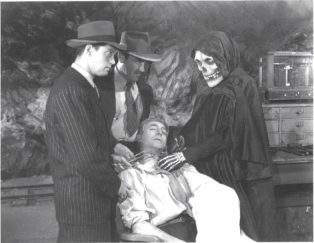
 

Republic’s The Crimson Ghost

Enter now to win a copy of

Cowboys, Creatures and Classics: The Story of Republic Pictures

Scene from the Crimson Ghost – 1946


Moviegoers throughout the 1930s and 1940s enjoyed film adventures from heroes on exotic animals to those in space crafts. Such was the case with The Purple Monster Strikes, the original Republic Martian invader serial. The Purple Monster was actually not a monster at all, nor was he purple. The villainous character was in reality a Caucasian, Martian space soldier. He was part of the advance guard preparing a vast invasion of earth, dressed in a blue, tight-fitting outfit, trimmed with scaly gold metallic material, and wearing a matching gilded hood. Among the Purple Monster’s alien abilities was the power to become a transparent phantom and enter the body of another, controlling his actions, thereby donning the ultimate disguise.

The Purple Monster Strikes was the first post-war serial of 1945. Republic was prohibited from using the term “rocket ship” when referring to the spacecraft the Purple Monster used in the film. Universal Studios had a copyright on the word which was used quite extensively in their serial Flash Gordon.

Billed as 1941’s “sensational serial surprise,” Republic introduced a chapter play that combined monsters designed to take over space with earthly fiends. Entitled The Mysterious Doctor Satan, the villain is a mad scientist who wants to rule the world and planets from other galaxies with an army of mechanical monsters. Audiences were treated to fifteen shivering, shuddering, surprising episodes of Dr. Satan manipulating the hideous robots he creates to rob and terrorize the nation into submission. Dr. Satan’s sworn enemy is a beefy man in a copper mask appropriately known as Copperhead. Copperhead assumes the identity from his deceased father who was a fugitive from crooked justice in the Old West. The misunderstood hero is determined to protect society from the depredations of Dr. Satan, and, at the same time, wipe out the stigma attached to the name Copperhead.

According to Jack Mathis’ book Valley of the Cliffhangers, The Mysterious Doctor Satan was intended to be a series that would feature Superman as the fighter against evil. At the last moment, DC Comics, the owners of the Superman character, refused to let Republic use the radio and comic series star. Instead of abandoning the project, the writers replaced Superman with Copperhead, a character of their own creation.

A popular character Republic Pictures was allowed to introduce in one of its chapter plays was Captain Marvel. Also known as Shazam, the superhero was created in 1939 by artist C. C. Beck and writer Bill Parker for Fawcett Comics. Captain Marvel was the most popular comic book superhero of the 1940s. He was also the first to be adapted into film. The film was entitled Adventures of Captain Marvel.

In an interdepartmental memo passed from various executives at Republic to Herbert Yates, the project was touted as having “massive potential to be a box office hit.” The twelve-part series premiered in March 1941.


To learn more about the many films Republic Pictures produced read

Cowboys, Creatures and Classics: The Story of Republic Pictures
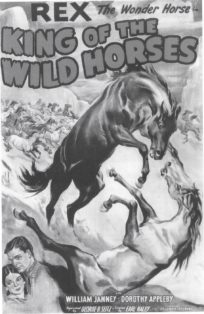
 

Republic’s Rex, King of the Wild Horses

Enter now to win a copy of

Cowboys, Creatures and Classics: The Story of Republic Pictures


The serial work producer Nat Levine was doing was extremely popular. Audiences flocked to theaters each week to find out how cowboy heroes like Johnny Mack Brown, Ken Maynard, and Tom Mix fared against the bad guys and to learn if equine stars like Rex, the King of Wild Horses, and canine actor Rin Tin Tin managed to save their pal Smiley Burnette from the villainous Harry Woods. Levine wanted to expand his moviemaking and looked to acquire the Mack Sennett production lot and facilities in order to make it happen. He approached Monogram Pictures’ executives Trem Carr and W. Ray Johnston about a merger. Neither was interested in combining his resources to purchase Mack Sennett. Both men felt the cost to run such a business would be too much to sustain. Yates heard about Levine’s proposal and offered to finance the deal. With Yates’ considerable wealth behind the enterprise and the promise that the two could share the responsibility of studio chief, Carr and Johnston decided to participate. The owners of Liberty and Majestic Studios also agreed to merge with Mascot and Monogram. The talent and resources of each small motion picture company were pooled and a distribution arm was also added to the corporation.

Republic Pictures was born in June 1935. As the money behind the venture, Yates wasted no time in asserting his authority. Although Johnston and Carr were installed as managers, Yates made it clear that he would make all major decisions regarding the company. The two executives were outraged by the mogul’s behavior but were compelled to stay with the new studio because they now lacked the means to start their own business. Nat Levine clashed with Yates, too, but chose to keep quiet in favor of making movies. He churned out a number of modest yet successful films during the first four years Republic was in operation.

Undeterred by the conflicts with his managing staff, Yates announced in a press conference with his top personnel that Republic Pictures would produce fifty-two films a year. Edward A. Golden, general sales manager for the studio, added that the company would strive to make exceptional pictures and cited problems with finances in the industry as a whole for the reason some companies delivered inferior products. Johnston shared his belief that not only financing played a part but that the lack of quality material was a contributing factor to bad movies being made. Johnston outlined Republic Pictures’ program to produce classics and the works of famous authors and urged American authors to “write better stories for screen production.”

Throughout the summer of 1935, Republic Pictures and its qualified staff made news. Stories about the ambitious independent studio’s line of pictures and the controversial comments about the industry appeared on the front pages of the newspapers. Johnston, an actor in his early days in Hollywood and a member of Franklin Roosevelt’s motion picture code authority, had definite thoughts about the salary lead actors at Republic should expect to earn. “Stars of today are paid according to their drawing power,” he told the Associated Press. “What they get is all right if they bring it back through the box office. Many of them don’t do that, however. We at Republic Pictures will pay according to the draw.”


To learn more about the many films Republic Pictures produced read

Cowboys, Creatures and Classics: The Story of Republic Pictures
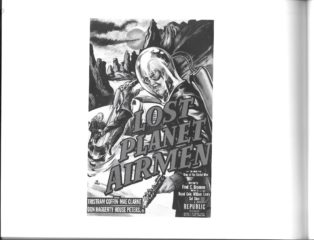
 

Fade to Black

Enter now to win a copy of

Cowboys, Creatures and Classics: The Story of Republic Pictures

One of the many chapter plays produced by Republic.

On August 17, 1958, Herbert Yates stormed out of a meeting with the principle shareholders of Republic Pictures and headed into the streets of New York. He was too mad to talk and hoped he could walk off some of his fury. Studio executives and stockholders had gathered in the city, 2,917 miles from the capital of the motion picture industry, to discuss the financial affairs of the company. The situation was dismal, and the blame for the current state of affairs was placed squarely in Yates’ lap. In fact, the frustrated executives accused the head of the studio of running the business for the private enrichment of himself and his family. Insulted by the claim, but unable to refute it, Yates slammed his fists on the boardroom table and stomped out of the room.

Abraham Meltzer, one of the studio’s backers who owned more than 540 shares of the company’s stock, contacted the state supreme court when Yates left and informed them of the board’s findings. Meltzer and the others were seeking an order to place Republic Pictures into receivership. The executives charged Yates with misappropriation of funds. According to Meltzer, Yates drew fifty thousand dollars a year for five years plus bonuses. That was in addition to his $150,000 a year salary. He further accused Yates of bringing Republic’s business to a standstill and trying to unload his shareholdings for a premium over the marketplace.

The studio executives also blamed the troubles Republic was encountering on Yates’ preoccupation with producing films to star Vera Ralston. The head of Republic Pictures had greenlit twenty films featuring the Czechoslovakian skater, and all but two were commercial failures. Yates had let his personal feelings for Ralston cloud his judgment, and the stockholders and the courts were compelled to make him answer for it.

A short twelve years prior to Yates’ confrontation with Meltzer and the other shareholders, the studio leader and Republic Pictures were the talk of the industry. Under Herbert Yates’ management, the company had brought comic book characters to life and sent them soaring through the skies. Daring cowboys thundered across the plains and brought evildoers to justice. Airplanes dropped down from the clouds and careened into buildings and bridges in spectacular explosions. Ticket buyers craving action and adventure found satisfaction in Republic Pictures’ productions. The New York Times proclaimed Yates’ studio the “little acorn that grew” and predicted the motion picture company would soon be an industry giant.

The February 2, 1941, edition of The New York Times read,

A far cry from those struggling days when it was the film industry’s stepchild and Hollywood’s flea circus, little independent Republic is today the happiest of picture companies. Republic is in the chips; its spacious lawn is rapidly disappearing under the hammering of carpenters busily building new sound stages, projection and recording rooms and other studio appurtenances. These improvements are being paid for by the substantial profit Republic tucked away in its bank account last year. Considering that Republic has been in business only five years and that the odds against its success were great, the fact that the company has a bank account of substantial size and description bears investigation.

More than just a knack is required to successfully manufacture low-cost movies. Good management in the executive department and showmanship in the productive division are the prime requisites.

Republic has risen out of the talents of entertainer such as Autry, Canova, Rogers, and Burnette and on the strength of their perennial popularity which will endure for always.

To learn more about the many films Republic Pictures produced read

Cowboys, Creatures and Classics: The Story of Republic Pictures
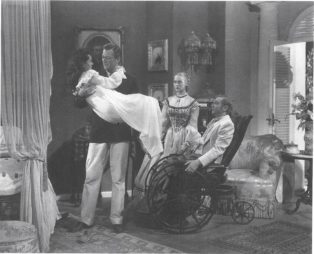
 

Gail Russell – Republic’s Leading Lady

Enter now to win a copy of

Cowboys, Creatures and Classics: The Story of Republic Pictures


Gail Russell in the arms of John Wayne


There were many talented female contract players at Republic Pictures. In the mid-1940s, the studio had more than 120 actors in its stable of gifted individuals. Some of those actresses became household names because of their work in front of the camera, and others rose to fame as a result of their off-screen exploits. The following is a look at a few of the studio’s most recognizable and popular women thespians, their careers, and the roles that made them stars.

One of Republic Pictures’ most popular actresses was one of the motion picture industry’s most troubled. Her name was Gail Russell. Russell, a beautiful brunette with dark, blue eyes, was a gifted talent who dreamed of becoming a commercial artist. She was born Elizabeth L. Russell in Chicago on September 21, 1924. Throughout her childhood, she was painfully shy and often hid under her parents’ piano whenever guests came to their home. The young girl only felt completely comfortable when she was sketching various people and places in her sphere of influence. She began drawing at the age of five years old and was considered exceptional by most who saw her sketches and paintings.

When she was in her late teens, her mother, Gladys Russell, encouraged her to set aside her drawing pencils and venture into films. Russell was fourteen when her parents moved to Los Angeles so their daughter could pursue their dream of her becoming a star. She attended Santa Monica High School, and as soon as she graduated, she auditioned for Paramount Pictures and signed a contract with the studio for fifty dollars a week.

Russell’s shyness followed her as she began her career. Acting instructors were hired to help her overcome her timidity, but it never completely subsided. It did add to her haunting persona, and she was cast in roles where that part of her personality could be highlighted. As her star rose in the industry, her fear of performing became more pronounced. With each film it took more effort to overcome her lack of self-confidence and commit to the part. While filming The Uninvited in 1944, Russell chose to deal with her paralyzing self-doubt by drinking. Alcohol did not quiet her nerves; it merely made her more anxious. By the end of the production, she had become dependent on liquor and was on the brink of a nervous breakdown. The Uninvited was a critical success, and the film was nominated for an Academy Award. Russell became even more popular thanks to the film. She went on to work with such stars as Alan Ladd and Joel McCrea, Jane Wyatt and Adolphe Menjou. The work was continuous and the pace grueling. Russell dealt with the frantic schedules the same way she did with her shyness, by drinking.

In 1946 Russell starred in the first of four films she made for Republic Pictures. John Wayne co-produced The Angel and the Badman and specifically requested Gail Russell to play opposite him in the western written and directed by James Edward Grant. Wayne was moved by her quiet, unassuming personality. He treated her with the respect and kindness she’d not known from many other leading men or producers. The two became good friends while working on the film. Wayne was protective of Russell. He recognized vulnerability in the actress some could have taken advantage of. He was a father figure to Russell, and she considered him to be a fiercely honest individual.

To learn more about the many films Republic Pictures produced read

Cowboys, Creatures and Classics: The Story of Republic Pictures