
The Biggest Little Studio

Enter now to win a copy of

Cowboys, Creatures and Classics: The Story of Republic Pictures
 

Republic Pictures was arguably the most important and influential studio in the history of the B movie. During the Golden Age of Hollywood, the studio flourished, and the low-budget commercial movies produced in mass made Republic a profitable concern. Herbert Yates enjoyed the financial reward for the B pictures his studio produced but lacked the respect studio heads like MGM’s David O’Selznick or Fox’s Darryl Zanuck had. It took a considerable amount of talent and innovation to make a B movie, and Yates employed an exceptional team of cinematographers, stuntmen and stuntwomen, and special effects artists to achieve the finished product. Despite the skill and invention needed to create the product, such films were generally considered inferior. Yates wanted to experience the admiration other film companies such as Paramount Pictures and United Artists received. It drove him to increase Republic’s feature film investments.

In the late 1930s, Yates decided to raise the status of the company. He wanted a better product coming out of the studio. He wanted to make an “A” picture. Yates needed a large budget, bankable stars, and a quality script to realize his vision. He believed he could begin gaining the respectability he longed for by developing a project entitled Man of Conquest. He poured considerable resources into the project. Man of Conquest, the fictionalized action biopic of Sam Houston, was Republic’s first A film.

Directed by George Nichols Jr. and starring Richard Dix and Joan Fontaine, the estimated budget for the movie was one million dollars. Man of Conquest was inspired by Marquis James’ Pulitzer Prize–winning book The Raven. New York film critics announced that Man of Conquest was a “thrilling drama skillfully splashed across a broad canvas.” The April 28, 1939, article found in the Brooklyn Daily Eagle praised the direction of the film noting that it “never loses track of its hero or allows its social message to become bigger than its story.” William Boehnel, film reviewer for the New York World Telegram, wrote that Man of Conquest was a “rousing, spectacular blend of Americanism and adventure which not only sounds the clarion call of freedom and democracy in high, resounding notes but related its message of liberty and the right of men to govern himself in a vigorous, colorful, thrilling manner.”

Herbert Yates was pleased Man of Conquest had done so well. The film was nominated for three Academy Awards: Best Art Direction, Best Sound Recording, and Best Original Score. The nominations were proof that Republic Pictures had what it took to develop a project to rival the bigger studios. Industry leaders acknowledged Yates’ effort, and he pledged to produce additional, bigger budget films. Those bigger films were to be done on a limited basis.

Yates was proud of the studio’s reputation for being a dominant force in serials. Not only was Republic good at it, but they also made a substantial amount of money, and financial success was even more important to Yates than respectability as an A movie studio.

Yates wanted to continue building the sales organization as well as creating bigger budget films. He believed a healthy balance of both would elevate the status of the company. In early 1939, he hired James Grainger, the former head of distribution for Fox and Universal Studios. Grainger immediately embarked on a series of meetings with theatrical distributors and exhibitors throughout the nation. He authorized the purchase of franchise distributors and established Republic’s own theatrical distribution system. Grainger was exceptional at his job. Within a year, he increased the number of exhibitors (theaters) to more than nine thousand. The number of theaters showing Republic Studios’ motion pictures grew even higher with each high-budget film and big-name cast member released. By the end of 1939, a mere four years after Herbert Yates founded the company, Republic was showing a profit of $4,742,175. Industry papers such as Variety and the Hollywood Reporter predicted the studio would “wind up a top flight major.”
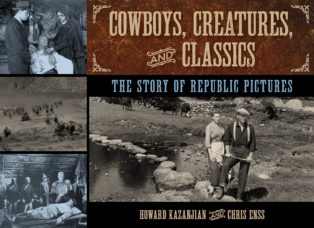
 

To learn more about the many films Republic Pictures produced read

Cowboys, Creatures and Classics: The Story of Republic Pictures
 

Ghouls, Freaks of Nature, and the Walking Dead

Enter now to win a copy of

Cowboys, Creatures and Classics: The Story of Republic Pictures

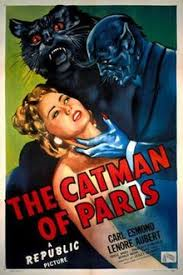
A dark figure weaves through a forest of imposing, leafless trees toward a weathered cabin in a clearing. An eerie mist blankets the ground, and a lone wolf howls in the distance. Inside the cabin, two men dressed in business suits and fedoras discuss plans to steal a counter atomic bomb device called the Cyclotrode. Their conversation is interrupted when the door of the structure is flung open and a madman wearing a skull mask and crimson robe enters. This is the Crimson Ghost, and the men deliberating over the robbery work for him. The Crimson Ghost is determined to get his hands on the Cyclotrode. The Cyclotrode cannot only stop nuclear missiles, but it can also cripple transportation and communications. The Crimson Ghost wants the invention for his own nefarious plans, including selling the device to foreign powers.

Two people know of the Crimson Ghost’s dangerous ambitions, and they are criminologist Duncan Richards and Diana Farnsworth, secretary for the professor who created the Cyclotrode. The duo is determined to stop the villain and his henchmen from taking the contraption and destroying lives.

Throughout the twelve-part serial named after the blackguard the Crimson Ghost, the duo matched wits and fists with the miscreant and his aides in an attempt to keep the Cyclotrode from being used for mass destruction. Duncan and Diana were threatened with death by explosion, poison gas, deadly slave collars, and death rays. Each of the episodes in the serial ended with a cliffhanger: a car plummeting over a cliff, a fire started leaving the heroes only moments to save the day, if at all, or a train bearing down on innocent parties.

The Crimson Ghost was just one of several “cliffhanger” serials produced by Republic Pictures that enticed audiences to return to the theater again and again to see if the heroes of the story won out or if the bad guy succeeded in thwarting attempts to put a stop to his diabolical intensions to obliterate mankind.

Republic’s stock and trade were cliffhanger serials—science fiction, mysteries, and the ever popular horror genre. Nat Levine, founder of Mascot Pictures and later a much-maligned executive working for Herbert Yates, is credited with the production of a cliffhanger. Writer, journalist, and film historian Ephraim Katz defines a cliffhanger as an adventure serial consisting of several episodes, each of which ends on a suspenseful note to hold the audience in expectation of the next.

Levine made a number of silent-film chapter plays that brought return business to the movie houses. One of the first was Isle of Sunken Gold. Produced in 1927, the adventure picture was about a sea captain who had half a map leading to a treasure buried on an island in the South Sea. The ruler of the island, a beautiful princess, had the other half of the map, and the two joined forces to battle a gang of pirates and a group of islanders who didn’t want anyone to get the treasure.

At Republic, Levine continued to create cliffhangers that excited and confounded moviegoers.

To learn more about the many films Republic Pictures produced read

Cowboys, Creatures and Classics: The Story of Republic Pictures
 

This Day…

1939 “The Wizard of Oz”, American musical fantasy film directed by Victor Fleming and King Vidor, premieres at Grauman’s Chinese Theatre, Hollywood, starring Judy Garland (Dorothy), Ray Bolger (Scarecrow), Jack Haley (Tin Man), Bert Lahr (Cowardly Lion), Frank Morgan (Wizard), Billie Burke (Glinda), and Margaret Hamilton (Wicked Witch).

The Making of a Cowboy

Enter now to win a copy of

Cowboys, Creatures and Classics: The Story of Republic Pictures

Silence, intense and oppressive, gripped the moonlit expanse of the plains. The slight mist that rose from the ground gave vague and uncertain outlines to the rocks that studded the terrain like stolid sentinels. There was no breeze—no sound or motion of any sort to mar the perfect stillness. No sound, that is, except the steady clump of hoofs as a solitary rider moved through the night.

The rider was Gene Autry. He sat easily in the saddle, but the muscles of his tall body were tensed and his eyes warily alert. He couldn’t shake off an eerie feeling of impending trouble. Neither could he account for his anxiety.

Gene’s horse, a dark sorrel named Champion, seemed to share his rider’s disquiet. Champion trotted smoothly and swiftly through the night, but his ears were twin points and his nostrils quivered.

“What’s gotten into us, Champion?” Gene asked in a low voice as he leaned forward to pat the horse’s neck. “We’re as nervous as a couple of colts. Everything certainly looks peaceful. There’s not a living critter in sight anywhere.”

It was the first time Gene had ever felt the uneasiness. He had traveled countless miles in the dark of night with only Champion and the stars for companions. Because he had spent half his life in the saddle, complete solitude and trackless country were nothing new to him.

Gene had been a cowboy for as long as he could remember. He loved the wild, free life of the plains. He had tamed broncs, hazed cattle, ridden point on trail drives, bulldogged the toughest of steers, and won a dozen rodeo championships.

He knew the mountains and plains in all kinds of weather. He was familiar with every detail of the country through which he traveled. He could identify the call of every creature of the West, and he knew the name of every tree and shrub. He was completely at home in the moonlit silence of the night.

There was no explanation for the feeling of depression that had fallen over him like a shroud. He hadn’t felt that way at sunset. What was there about the darkness of this particular night that disturbed him?

Gene was heading for country where oil had recently been discovered. A week before, he had run into an old prospector just in from the oil fields. As he listened to the old man’s stories of the excitement of prospecting for oil, the suspense of drilling down through the sun-baked earth, and the thrill of watching the stream of “black gold” gush upward toward the sky, Gene decided to take a look at this new world of derricks and machines and grim-faced men.

Now, as he rode toward the oil fields, Gene Autry was on the way to greater excitement and adventure than he had ever known.

He started to whistle, but the tune quickly died away.

“Hang it all,” he muttered. “I can’t shake this mood. I guess I’ve been in the saddle too long. It’s about time to pitch camp and turn in.”

Ahead loomed a clump of trees, silhouetted as a patch of black against the sky. Though it was early evening, the rider decided to camp somewhere among those trees. As Champion brought him near the wooded area, Gene heard the sound of running water. Champion’s ears cocked forward at the rippling sound and Gene grinned in the darkness.

“That’s all you need to hear, eh, Champion? I can let the reins fall and you’ll head for that stream,” he said to the sorrel

Cool leaves of low branches brushed Gene’s face and the broad brim of his hat. Then Champion stopped abruptly, his strong muscles quivering. Gene glanced sharply ahead and gasped in surprise as his eyes met those of another man on a level with his own. The moonlight, slanting through an opening of the trees, fell full upon the other man’s face. For a moment, Gene Autry could only stare in disbelief. Then he realized the man in front of him was dead, suspended from the branches overhead by a noose about his neck. His feet dangled several inches off the ground.

To learn more about the many films Republic Pictures produced read

Cowboys, Creatures and Classics: The Story of Republic Pictures
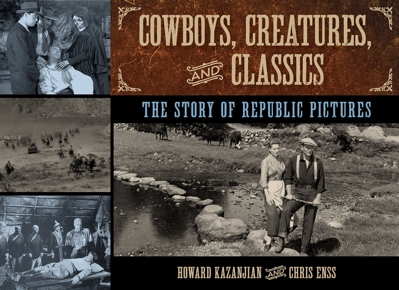
 

Herbert Yates’s Republic

Enter now to win a copy of

Cowboys, Creatures and Classics: The Story of Republic Pictures


Herbert Yates, a tall, compact man in his mid-fifties, stood staring out the window of his magnificent office at Republic Pictures in Studio City, California, surveying the domain spread before him. A scene from a western film was being rehearsed in the middle distance. The usual, turbulent activity surrounded it: extras, makeup women, cameramen, grips, assistants, set designers, etc. Yates lit a cigar the size of a baby’s leg and held it tightly in his teeth. He took a long puff and blew the smoke out the corner of his mouth and checked the pockets of his charcoal gray, Brooks Brothers suit for the additional cigars he had tucked away. He patted them reassuringly, then rolled the fat stogie from one side of his mouth to the other.

Yates had acquired his taste for cigars while working as a salesman at the American Tobacco Company. Paired with a stiff bow tie, a receding hairline, and a dour expression, the cigar added a layer of seriousness to his persona. As head of a burgeoning, motion picture studio, he felt the look was necessary. He wanted to appear menacing. More often than not, his business approach was “never underestimate the power of good, old-fashioned intimidation.”

Herbert Yates founded Republic Pictures in 1935, but his history working in the movie industry began twenty years prior to the creation of the studio. Yates’ introduction to cinema came by way of a film-processing business called Hedwig Laboratories. He learned all about developing celluloid and relationships with some of the most profitable filmmaking executives in the field. He parlayed his knowledge into his own processing venture called Consolidated Film Industries. In a short time, Consolidated Film Industries became the leading laboratory in southern California. They processed negatives and made prints for the majority of movies produced by studios such as First National Pictures, Warner Bros., and Fox Film Corporation. Consolidated Film Industries proved to be extremely profitable for Yates, and he sought other areas of the industry of which to be a part. He acquired record companies and financed ventures for director Mack Sennett and comedic actor Fatty Arbuckle.

Within eight weeks of advancing funds to Sennett and Arbuckle, Yates received a 100 percent return on his investment. The speed in which his funds were replenished intrigued him. Yates saw the profit to be made in producing motion pictures, and it whetted his appetite for further opportunities.


To learn more about the many films Republic Pictures produced read

Cowboys, Creatures and Classics: The Story of Republic Pictures


Cowboys, Creatures & Classics

Enter now to win a copy of

Cowboys, Creatures and Classics: The Story of Republic Pictures

Not so many generations ago boys and girls of all ages flocked to movie houses across the country to watch gallant heroes in white hats outwit sinister bankers or corrupt government officials. They shrieked as lovely damsels in distress dangled precariously on a branch high above a yawning chasm. They cheered when the good guy rescued the frightened female and applauded when the villain in the black hat was hauled off to the hoosegow. Only a handful of Hollywood movie companies in the post-depression era produced such films and among those only one dominated the business – Republic Pictures.

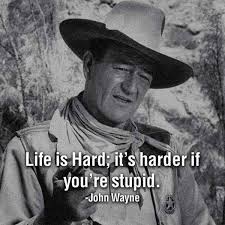
Some of Hollywood’s most notable stars and best known characters of the 30s, 40s, and 50s rose to prominence at Republic Pictures. For nearly twenty-five years the studio produced Saturday afternoon serials starring such characters as Rocket Man, Dick Tracy, The Lone Ranger, Zorro, Captain Marvel and countless “cowboy operas” or singing cowboy pictures starring such well known figures as Roy Rogers and Gene Autry. The studio helped launch the career of the legendary John Wayne, who made thirty-three films for the company, including such notable efforts as Sands of Iwo Jima, The Quiet Man, and the Fighting Seabees.

Under Republic Picture’s majestic banner of an eagle perched high atop a mountain peak, low budget, action films such as Spy Smasher and the Perils of Nyoka were made. Big budget motion pictures such as Macbeth and Man of Conquest were also produced by the company recognized as one of history’s most prolific studios. More than 1,100 movies were made by Republic Pictures during the twenty-four years the studio was in existence.


To learn more about the many films Republic Pictures produced read

Cowboys, Creatures and Classics: The Story of Republic Pictures


Cowboys, Creatures and Classics: The Story of Republic Pictures

Not so many generations ago boys and girls of all ages flocked to movie houses across the country to watch gallant heroes in white hats outwit sinister bankers or corrupt government officials. They shrieked as lovely damsels in distress dangled precariously on a branch high above a yawning chasm. They cheered when the good guy rescued the frightened female and applauded when the villain in the black hat was hauled off to the hoosegow. Only a handful of Hollywood movie companies in the post-depression era produced such films and among those only one dominated the business – Republic Pictures.

Some of Hollywood’s most notable stars and best known characters of the 30s, 40s, and 50s rose to prominence at Republic Pictures. For nearly twenty-five years the studio produced Saturday afternoon serials starring such characters as Rocket Man, Dick Tracy, The Lone Ranger, Zorro, Captain Marvel and countless “cowboy operas” or singing cowboy pictures starring such well known figures as Roy Rogers and Gene Autry. The studio helped launch the career of the legendary John Wayne, who made thirty-three films for the company, including such notable efforts as Sands of Iwo Jima, The Quiet Man, and the Fighting Seabees.

Under Republic Picture’s majestic banner of an eagle perched high atop a mountain peak, low budget, action films such as Spy Smasher and the Perils of Nyoka were made. Big budget motion pictures such as Macbeth and Man of Conquest were also produced by the company recognized as one of history’s most prolific studios. More than 1,100 movies were made by Republic Pictures during the twenty-four years the studio was in existence.

Republic was the brainchild of Herbert J. Yates, who founded the studio in 1935 when he convinced several smaller studios such as Chesterfield, Monogram and Mascot to consolidate under one banner. The company wasted no time in establishing itself as one of the most productive and efficient in Hollywood.

Yates assembled a talented group of directors, technicians and performers who merged into a hardworking, dedicated team. Republic’s special effects duo of Howard and Theodore Lydecker was hailed as the best in the business. Its music department was equally effective. Such notables as future Broadway producer Cy Feuerand and eventual Academy Award winner Victor Young scored films for the studio.

And at Republic, stunt work became an art. Yakima Canutt, David Sharpe, and Tom Steele were among the stuntmen who worked there, and all three became legends within the movie world.

Republic’s filming techniques were just as fast-paced as its final products. Whereas major studios might shoot only three or four scenes in a day, Republic would shoot dozens. The directors of the high energy, thrill-a-minute chapter plays were driven, talented men such as Joseph Kane, John English, and William Whitney. Kane, English, and Whitney directed the majority of the westerns and cliffhanger serials produced by the studio. Between 1939 and 1942, Republic turned out sixty-six multipart, cliffhanger serials.

Yates depended on the speed and flexibility of his stable of actors, writers, directors, and behind the scenes talent to bring to life the topical projects he believed audiences wanted to see. For example, within a week after the Japanese bombed Pearl Harbor, Republic writers were at work on a script built around the incident. In less than six months, “Remember Pearl Harbor” was playing in the nation’s theatres.

Yates not only built plots around current events, but on popular songs too. When the tune “Pistol Packin Mama” became a hit, Yates quickly put out a film with the title.

Republic produced a number of low budget or “B” horror and mystery films, but it was the cowboy westerns and serials that remained the company’s bread-and-butter throughout its history. Those B pictures usually ended with the bad guy being arrested or killed and were extremely popular with movie goers.

When television exploded on the scene in the 1950s, it signaled the beginning of the end of Republic Pictures. People no longer needed to go to the theatre to see their heroes save the day. The little pictures for which the studio was noted became less and less profitable due to rising costs and the allure of T.V. The studio closed in 1959.

Killer Bs: The Rise and Fall of Republic Pictures tells the story of the ambitious film company that made a big impact on Hollywood and influenced some of today’s most gifted filmmakers and industry leaders. It’s a tribute to cheap thrills and guilty pleasures.

Included in the book is information about the actors who helped to make Republic Pictures popular and one in particular many believe responsible for the studio’s decline. The careers of the special effects artists, stuntmen, and the films that brought them fame and fortune are examined in the book too.

So, grab a bag of popcorn and a bottle of soda pop and relive the excitement and thrills of those wonderful, bygone days before television when Republic Studios was king and B pictures ruled the box office.